

Introduction
Games and gambling have been part of human civilization for centuries, evolving alongside culture, technology, and society itself. From ancient dice carved out of bone to today’s high-tech online casinos and competitive video gaming platforms, the desire to play, compete, and take risks has always fascinated people. Games and gambling are more than simple pastimes — they reflect human psychology, economic behavior, and our natural attraction to uncertainty and reward.
At their core, games are associated with skill, strategy, entertainment, and social interaction. They challenge the mind, test reflexes, and often build community through competition and cooperation. Gambling, on the other hand, introduces the element of financial risk, where money or valuables are wagered on uncertain outcomes. While games often emphasize ability, gambling thrives on chance — though in many modern formats, the line between the two has become increasingly blurred.
In today’s digital age, games and gambling have expanded far beyond traditional board games or physical casinos. Online betting platforms, mobile gaming apps, esports tournaments, and virtual casinos have transformed the industry into a global phenomenon. With this growth comes both opportunity and concern. The industry generates significant economic revenue and provides entertainment to millions, yet it also raises important questions about addiction, regulation, ethics, and responsible participation.
Understanding games and gambling requires looking beyond the surface excitement. It involves exploring the psychology behind risk-taking, the economic systems that sustain the industry, the cultural attitudes that shape its acceptance, and the technological innovations driving its future. Whether viewed as harmless entertainment, strategic competition, or high-risk behavior, games and gambling continue to play a powerful role in modern society.
This article examines the history, psychology, social impact, economic influence, and future trends of games and gambling, offering a comprehensive perspective on one of the world’s most enduring and evolving forms of entertainment.
The Evolution of Games and Gambling in the Digital Era
The landscape of games and gambling has changed dramatically in the last two decades. What once required physical presence in casinos, betting shops, or gaming arenas can now be accessed instantly through smartphones, tablets, and computers. The digital transformation has not only expanded accessibility but has also reshaped how people interact with games and gambling platforms.
The Rise of Online Platforms
Online casinos and betting platforms have become a dominant force in the gambling industry. Players can participate in slot games, poker tournaments, sports betting, and live dealer games from virtually anywhere in the world. This convenience has significantly increased global participation.
Unlike traditional casinos, digital platforms operate 24/7. They offer bonuses, loyalty programs, and interactive features designed to enhance user engagement. The integration of secure payment gateways, digital wallets, and cryptocurrency has further simplified transactions.
Mobile Gaming and Gambling
The shift toward mobile-first technology has accelerated growth. Mobile apps now provide seamless gameplay experiences with high-quality graphics and real-time interaction. Push notifications, personalized promotions, and in-app rewards create a highly engaging ecosystem.
This convenience, however, also increases the importance of responsible gambling measures. Easy access means users must exercise stronger self-control and awareness.
Live Streaming and Real-Time Interaction
Live dealer games combine traditional casino experiences with online accessibility. Players can interact with professional dealers via live video streams, creating a sense of authenticity and social engagement.
Similarly, esports betting has emerged as a powerful trend. Competitive video gaming tournaments attract millions of viewers, and wagering on these events has created new revenue streams and new audiences.
Artificial Intelligence and Personalization
Artificial Intelligence (AI) plays a growing role in shaping user experiences. Platforms use AI algorithms to:
- Recommend games based on player behavior
- Detect unusual betting patterns
- Identify signs of problem gambling
- Optimize marketing strategies
While personalization enhances engagement, it also raises ethical questions about data usage and behavioral influence.
Blockchain and Transparency
Blockchain technology has introduced provably fair gaming systems. Some online gambling platforms now use decentralized systems to ensure transparency in outcomes. Cryptocurrency transactions offer anonymity and fast cross-border payments, though they also introduce regulatory complexities.
Blurring the Line Between Gaming and Gambling
Modern video games increasingly incorporate gambling-style mechanics. Loot boxes, randomized rewards, and in-game purchases mimic betting structures. Players spend real money for uncertain outcomes, which closely resembles gambling behavior.
This overlap has sparked global debates about regulation, particularly concerning youth exposure. Governments and consumer protection agencies continue to examine how digital gaming environments should be classified and monitored.
The digital era has transformed games and gambling into a borderless, technology-driven industry. While innovation continues to enhance user experiences, it also demands stronger regulations, ethical responsibility, and informed participation.
Economic Power and Global Industry Growth
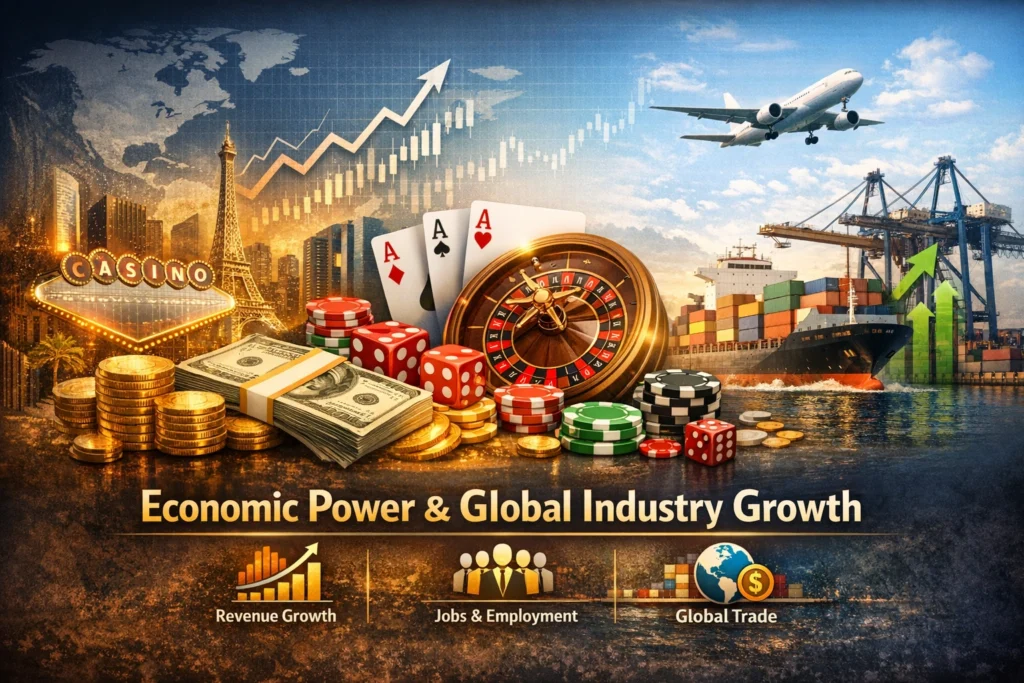
Games and gambling have evolved into one of the most powerful entertainment industries in the world. What began as localized betting activities and traditional board games has expanded into a multi-billion-dollar global market driven by innovation, tourism, media partnerships, and digital platforms.
A Multi-Billion-Dollar Industry
The global gambling industry generates hundreds of billions of dollars annually. Revenue comes from:
- Land-based casinos
- Online betting platforms
- Lotteries
- Sports wagering
- Poker tournaments
- Mobile gaming applications
Major casino hubs such as Las Vegas, Macau, and Singapore have built entire tourism ecosystems around gambling entertainment. These cities benefit from hotels, restaurants, shows, and infrastructure development linked to gaming revenue.
Online gambling has further accelerated industry expansion by removing geographic limitations. Players from different countries can participate on international platforms, creating a borderless economic network.
Government Revenue and Taxation
Many governments regulate gambling because it generates significant tax revenue. State lotteries, for example, are often used to fund education, healthcare, and public infrastructure projects.
Taxation models vary:
- Fixed licensing fees
- Revenue-based taxes
- Player-level taxation
- Corporate gambling taxes
While gambling can support public services, critics argue that it disproportionately collects money from lower-income individuals.
Job Creation and Employment
The games and gambling industry creates millions of jobs worldwide, including:
- Casino staff and management
- Game developers
- Software engineers
- Marketing professionals
- Data analysts
- Hospitality workers
The rise of esports and streaming platforms has also created new career opportunities for professional gamers, commentators, and content creators.
Economic Risks and Social Costs
Despite its economic contributions, gambling also carries financial risks for individuals and communities. Problem gambling can lead to:
- Personal debt
- Bankruptcy
- Relationship breakdown
- Reduced workplace productivity
Social service systems often bear the cost of supporting individuals affected by gambling addiction. This creates a complex balance between economic gain and social responsibility.
Corporate Competition and Innovation
Competition in the gambling industry drives continuous innovation. Companies invest heavily in:
- User experience design
- Secure payment systems
- Data analytics
- AI-driven personalization
- Responsible gaming tools
Brand reputation plays a critical role. Operators that prioritize transparency and player protection often build stronger long-term trust.
The economic dimension of games and gambling highlights both opportunity and responsibility. While the industry fuels employment, tourism, and government revenue, it also demands ethical oversight to minimize financial harm and social consequences.
The Psychology of Risk, Reward, and Human Behavior
At the heart of games and gambling lies human psychology. The reason people are drawn to betting, competition, and uncertain outcomes goes far beyond money. It is deeply connected to how the human brain processes risk, reward, excitement, and anticipation.
Understanding the psychological mechanisms behind gambling helps explain both its appeal and its potential dangers.
The Science of Uncertainty
Humans are naturally curious about uncertain outcomes. When we do not know what will happen next, our brain becomes highly alert. This heightened state increases focus and emotional engagement.
In gambling, uncertainty is the core attraction. Whether spinning a roulette wheel or placing a sports bet, the unknown result stimulates anticipation. The brain releases dopamine not only when a person wins but also during the waiting period before the result appears.
Interestingly, unpredictable rewards create stronger engagement than predictable ones. This is known as a variable reward system, and it is one of the most powerful behavioral motivators.
The Thrill of Winning
Winning produces excitement, validation, and confidence. Even small victories can create a strong emotional reaction. The brain links gambling with positive reinforcement, encouraging repetition of the behavior.
However, the emotional high of winning can sometimes distort perception. Players may overestimate their skill or believe they are on a “lucky streak,” even when outcomes are random.
Losses and the “Chasing” Effect
Losses can trigger frustration and determination. Many gamblers attempt to “chase losses,” meaning they continue betting in an effort to recover previous money.
This behavior is driven by emotional reasoning rather than logical analysis. The desire to restore balance often overrides rational decision-making, increasing financial risk.
Cognitive Biases in Gambling
Several psychological biases influence gambling behavior:
- Illusion of Control: Believing one can influence random outcomes.
- Gambler’s Fallacy: Assuming past events affect future independent outcomes.
- Confirmation Bias: Remembering wins more clearly than losses.
- Overconfidence Bias: Overestimating personal skill in uncertain situations.
These biases make gambling emotionally compelling but also potentially misleading.
Social and Emotional Escape
For some individuals, gambling offers temporary escape from stress, boredom, or emotional difficulties. The immersive nature of games creates distraction from everyday problems.
While occasional entertainment may be harmless, relying on gambling as an emotional coping mechanism increases the risk of dependency.
The Role of Environment
Lighting, sound effects, visual design, and game speed are intentionally structured to maintain engagement. Online platforms use animations, celebratory sounds, and visual rewards to enhance emotional stimulation.
Digital personalization further amplifies psychological impact by recommending games based on user behavior patterns.
The psychology of games and gambling explains why millions are drawn to them. The combination of uncertainty, anticipation, reward, and emotional engagement creates a powerful experience. Recognizing these psychological influences is essential for maintaining balance and making informed decisions in environments built around risk and reward.
Social Impact and Cultural Influence
Games and gambling do not exist in isolation. They are deeply connected to culture, community, and social identity. Across different regions of the world, attitudes toward gambling vary widely, shaped by tradition, religion, economic conditions, and media representation.
Understanding the social and cultural dimensions of games and gambling helps reveal why they are celebrated in some societies and restricted in others.
Cultural Acceptance and Tradition
In many cultures, games of chance are integrated into festivals, holidays, and family gatherings. Friendly card games, sports betting during major tournaments, or community lottery pools are seen as normal social activities.
For some societies, gambling is tied to tradition. Historical betting practices may be passed down through generations, making participation feel like a cultural norm rather than a risky activity.
In contrast, other cultures discourage or prohibit gambling based on moral or religious principles. In these regions, gambling may be restricted by law or viewed as socially unacceptable.
Media and Pop Culture Influence
Movies, television shows, and social media often glamorize gambling. High-stakes poker games, luxury casino lifestyles, and dramatic wins are portrayed as symbols of intelligence, courage, and success.
This portrayal can influence public perception. While entertainment media focuses on big wins and glamorous environments, it rarely highlights long-term losses or addiction struggles.
Online influencers and streamers also contribute to the normalization of betting, especially among younger audiences. Live-streamed casino sessions and sports betting predictions can shape attitudes and behavior.
Community and Social Bonding
Games — even those involving small wagers — often create social connection. Poker nights, fantasy sports leagues, and group lottery tickets encourage shared experiences.
Competition builds camaraderie. In many cases, the entertainment value comes as much from social interaction as from financial stakes.
However, social pressure can sometimes push individuals to gamble beyond their comfort level, especially in group settings where participation feels expected.
Youth Exposure and Digital Generations
The rise of digital gaming has exposed younger generations to gambling-style mechanics earlier than ever before. Features such as randomized in-game rewards, virtual currencies, and loot boxes closely resemble betting structures.
This early exposure raises concerns about long-term behavioral patterns. Regulators and parents increasingly question how gaming environments influence attitudes toward risk and money.
Social Consequences of Problem Gambling
While many people gamble responsibly, problem gambling can have serious social effects:
- Family conflicts
- Relationship breakdown
- Financial strain
- Isolation
- Workplace performance decline
Communities may also experience broader impacts when gambling addiction rates increase, including demand for counseling services and financial support programs.
The social and cultural impact of games and gambling is complex. For some, it is harmless entertainment and social bonding. For others, it can become a source of financial stress and emotional difficulty. The key lies in awareness, education, and balanced participation within a responsible framework.
Responsible Gaming and Gambling: Awareness, Control, and Smart Participation
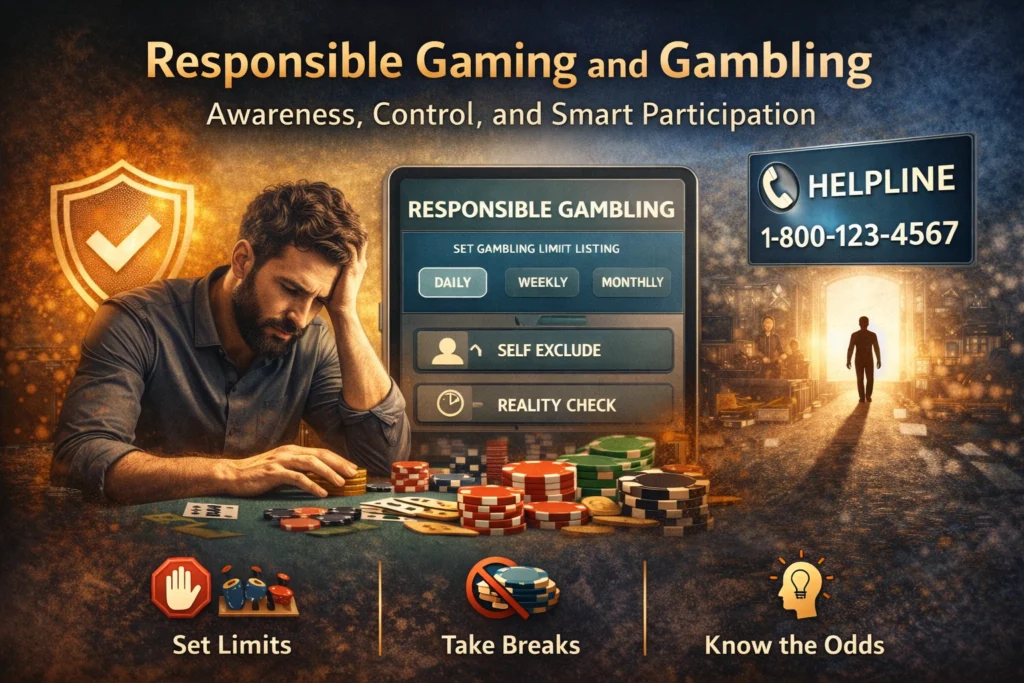
Games and gambling can be entertaining, competitive, and socially engaging, but responsible gaming and responsible gambling are essential for maintaining balance. As the games and gambling industry continues to expand through online platforms, mobile apps, and digital casinos, the importance of responsible gambling practices becomes even more critical.
High accessibility means higher responsibility. Understanding how to approach games and gambling with discipline protects both finances and mental well-being.
Understanding Responsible Gambling
Responsible gambling means participating in games and gambling activities with awareness of risks, limits, and outcomes. It involves treating gambling as entertainment — not as a source of income or financial recovery.
Key principles of responsible gambling include:
- Setting strict spending limits before playing
- Limiting time spent on games and gambling platforms
- Avoiding gambling when emotionally stressed
- Never chasing losses
- Accepting losses as part of the experience
Responsible gaming ensures that games and gambling remain recreational rather than harmful.
Setting Financial Boundaries
One of the most important aspects of responsible gambling is money management. Before engaging in games and gambling, players should:
- Allocate a fixed entertainment budget
- Use only disposable income
- Avoid borrowing money for gambling
- Separate gambling funds from essential expenses
Financial discipline reduces the risk of gambling addiction and long-term debt.
Recognizing Warning Signs
While many individuals enjoy games and gambling without issues, it is important to recognize early warning signs of problem gambling:
- Increasing bet sizes frequently
- Feeling anxious or restless when not gambling
- Hiding gambling activity from family
- Using gambling to escape problems
- Attempting to recover repeated losses
Early awareness allows for timely intervention and support.
Responsible Gambling Tools in Online Platforms
Modern online games and gambling platforms now integrate responsible gaming tools to promote safer participation. These tools include:
- Deposit limits
- Loss limits
- Time reminders
- Self-exclusion options
- Reality check notifications
- Cooling-off periods
Such features empower players to control their gaming and gambling behavior.
Education and Probability Awareness
Understanding odds is fundamental in games and gambling. Many players misunderstand probability and house edge. Learning how gambling systems are structured helps players make informed decisions.
For example:
- Casinos operate with built-in statistical advantages
- Slot machines use random number generators
- Short-term wins do not guarantee long-term profit
When players understand how games and gambling function mathematically, expectations become realistic.
The Role of Regulation
Government regulation plays a major role in promoting responsible gambling. Licensing authorities require gambling operators to:
- Ensure fair play
- Protect customer data
- Prevent underage gambling
- Provide responsible gambling resources
Strong regulation supports a healthier games and gambling environment.
Seeking Help and Support
If games and gambling begin to negatively affect daily life, professional support is available. Counseling services, therapy programs, and peer-support groups help individuals regain control.
Open communication with family and financial advisors also strengthens recovery efforts.
Games and gambling can provide entertainment, excitement, and social interaction when approached responsibly. High awareness, financial discipline, and knowledge of risks are essential for sustainable participation. Responsible gaming transforms games and gambling from potential harm into controlled recreation, ensuring that enjoyment never turns into dependency.
The Future of Games and Gambling: Innovation, Technology, and Global Expansion
The future of games and gambling is being shaped by rapid technological innovation, changing consumer behavior, and evolving global regulations. As digital transformation accelerates, games and gambling are moving beyond traditional casinos and betting shops into immersive, data-driven, and highly personalized ecosystems.
Understanding the future of games and gambling requires examining emerging technologies, new player demographics, and the balance between innovation and responsibility.
Virtual Reality and Immersive Gambling
Virtual Reality (VR) is expected to redefine games and gambling experiences. VR casinos can replicate real-world casino environments, allowing players to walk through digital gaming floors, interact with other players, and engage with live dealers in immersive settings.
This next-generation gaming environment enhances realism and social interaction. However, increased immersion may also intensify engagement, making responsible gambling tools even more important.
Artificial Intelligence and Smart Gaming
Artificial Intelligence (AI) is already transforming games and gambling platforms. AI systems analyze player behavior to:
- Personalize game recommendations
- Detect unusual betting patterns
- Identify early signs of gambling addiction
- Improve customer support through chatbots
AI-driven analytics allow operators to enhance user experience while also promoting safer gambling practices. In the future, AI may play an even stronger role in predicting risky behavior and automatically applying protective measures.
Blockchain and Decentralized Gambling
Blockchain technology is creating transparency in games and gambling. “Provably fair” systems allow players to verify game outcomes through cryptographic algorithms.
Cryptocurrency payments are also becoming more common in online gambling. They offer:
- Faster transactions
- Lower fees
- Cross-border accessibility
- Enhanced privacy
However, regulatory authorities continue to evaluate how blockchain-based gambling should be governed to prevent misuse.
Esports Betting and New Demographics
Esports betting is one of the fastest-growing segments in games and gambling. Competitive gaming tournaments attract millions of viewers worldwide, and betting on esports matches has become a major industry.
This trend introduces younger, digitally native audiences to gambling environments. As a result, regulators and platforms must prioritize responsible gambling education for new participants.
Gamification and Social Casino Apps
Gamification is blending traditional games and gambling mechanics with reward systems, leaderboards, and achievement badges. Social casino apps simulate gambling experiences without real-money payouts but still replicate betting behavior patterns.
These hybrid formats blur the line between gaming and gambling, raising important questions about regulation and psychological impact.
Global Market Expansion
Emerging markets in Asia, Africa, and Latin America are driving growth in the games and gambling industry. Increasing internet penetration, smartphone adoption, and digital payment solutions are expanding access.
Governments in many regions are updating gambling laws to balance revenue generation with consumer protection. The global nature of online gambling makes international cooperation increasingly necessary.
Balancing Innovation and Responsibility
As games and gambling evolve, innovation must be balanced with ethical responsibility. Operators, regulators, and technology developers must work together to ensure:
- Transparent operations
- Fair gaming systems
- Strong data protection
- Responsible gambling safeguards
- Protection of vulnerable populations
The future of games and gambling will likely be more immersive, more personalized, and more technologically advanced. The challenge will not be innovation itself, but ensuring that growth remains sustainable and socially responsible.
Games and gambling are entering a new era defined by digital transformation, global reach, and intelligent systems. With the right balance of innovation and regulation, the industry can continue to grow while protecting players and maintaining integrity.
Ethical Concerns and Regulatory Challenges in Games and Gambling
As games and gambling continue to expand globally, ethical concerns and regulatory challenges have become central issues. The rapid growth of online gambling, mobile betting, and digital gaming platforms has created new opportunities, but it has also introduced complex questions about fairness, consumer protection, advertising practices, and social responsibility.
The conversation around games and gambling is no longer limited to entertainment — it now includes law, ethics, public health, and digital governance.
Advertising and Marketing Ethics
Marketing plays a powerful role in promoting games and gambling platforms. Online ads, celebrity endorsements, sports sponsorships, and influencer partnerships have normalized gambling in mainstream media.
However, ethical concerns arise when:
- Advertisements target vulnerable individuals
- Promotions exaggerate winning potential
- Bonuses encourage excessive gambling
- Marketing reaches underage audiences
Responsible advertising in games and gambling must balance commercial goals with social accountability.
Protecting Vulnerable Populations
Certain groups are more vulnerable to gambling-related harm, including:
- Young adults
- Individuals with financial stress
- People experiencing emotional difficulties
- Those with prior addiction history
Online games and gambling platforms must implement strict age verification systems and responsible gambling measures to protect at-risk individuals.
Governments often require operators to provide helpline information, self-exclusion programs, and clear risk warnings.
Fairness and Transparency
Trust is essential in games and gambling. Players must believe that outcomes are fair and systems are not manipulated.
To maintain fairness, reputable gambling operators use:
- Certified Random Number Generators (RNGs)
- Independent audits
- Transparent payout percentages
- Clear terms and conditions
Lack of transparency can damage industry credibility and lead to stricter regulation.
Cross-Border Regulation
One of the biggest regulatory challenges in modern games and gambling is cross-border access. Online platforms can operate internationally, while laws differ from country to country.
Some nations fully legalize and regulate online gambling. Others impose restrictions or bans. This inconsistency creates enforcement difficulties and encourages unlicensed platforms to operate in legal gray areas.
International cooperation and standardized frameworks may become more important in the future.
Data Privacy and Cybersecurity
Digital games and gambling platforms collect large amounts of user data, including financial information and behavioral patterns. Protecting this data is a critical ethical obligation.
Cybersecurity measures must prevent:
- Identity theft
- Financial fraud
- Account hacking
- Data breaches
Strong encryption and compliance with data protection laws are essential for maintaining user trust.
The Debate Over Government Involvement
Another ethical debate centers on government participation in gambling revenue. Many governments operate lotteries or license casinos to generate public funds.
Critics argue that governments may become financially dependent on gambling income, potentially reducing incentives to limit gambling-related harm.
Supporters contend that regulated gambling is safer than unregulated markets and can fund public services responsibly.
Ethical and regulatory challenges will continue to shape the future of games and gambling. As technology advances and global participation increases, maintaining fairness, transparency, and consumer protection will remain critical priorities. Sustainable growth depends not only on innovation, but also on strong ethical foundations and responsible oversight.
Skill vs. Luck in Games and Gambling
One of the most debated topics in games and gambling is the balance between skill and luck. Understanding whether an activity is primarily skill-based or chance-based has major implications for regulation, player expectations, and long-term outcomes.
The distinction between skill and luck shapes how games and gambling are perceived legally, socially, and psychologically.
What Defines a Game of Skill?
A game of skill is one where the outcome is largely determined by a player’s knowledge, strategy, experience, and decision-making ability. In skill-based games:
- Practice improves performance
- Strategy influences results
- Long-term consistency is possible
- Experienced players can outperform beginners
Examples include competitive sports, chess, certain card games, and esports competitions. In these games and gambling hybrids, probability exists, but player expertise plays a dominant role over time.
What Defines a Game of Luck?
A game of luck, or chance, is primarily determined by randomness. No amount of skill can guarantee a specific outcome because results are generated by probability systems.
Characteristics of luck-based gambling include:
- Random number generators (RNGs)
- Fixed house edge
- Independent outcomes
- No long-term skill advantage
Slot machines, lotteries, and roulette are classic examples of luck-dominated gambling activities.
The Blended Nature of Modern Games and Gambling
Many modern activities combine both skill and luck. Poker, for example, involves random card distribution but also requires strategy, psychology, and risk management.
Sports betting includes analytical research and statistical knowledge, yet final outcomes depend on unpredictable real-world events.
This blend makes classification complex. Some jurisdictions treat certain betting activities as skill-based competitions, while others classify them as gambling.
Legal Implications
The skill-versus-luck debate directly impacts gambling laws. In some countries:
- Skill-based competitions are regulated differently
- Online fantasy sports are categorized separately
- Taxation rules vary depending on classification
The definition of games and gambling under the law can influence licensing requirements and market access.
Psychological Perception of Control
Even in luck-based gambling, players often believe skill influences outcomes. This perception can increase confidence and emotional engagement.
However, misunderstanding the role of chance can lead to unrealistic expectations. Recognizing when luck dominates over skill is essential for responsible gambling behavior.
Long-Term Mathematical Reality
In purely chance-based games and gambling systems, the house edge ensures long-term operator profitability. While short-term wins are possible, consistent profit for players is statistically unlikely.
In skill-dominant environments, experienced participants may achieve long-term success — but only through discipline, research, and strategic decision-making.
The relationship between skill and luck defines the structure of games and gambling. Understanding this balance empowers players to approach participation with realistic expectations. Whether driven by strategy or randomness, recognizing how outcomes are determined is essential for informed and responsible engagement.
Conclusion: The Enduring Power of Games and Gambling
Games and gambling have remained deeply rooted in human society because they reflect our natural attraction to challenge, competition, uncertainty, and reward. From traditional card games to modern online betting platforms, the evolution of games and gambling shows how entertainment continuously adapts to cultural and technological change.
Today, games and gambling are no longer limited to physical casinos or local betting shops. Digital platforms have transformed the experience into a global industry accessible from anywhere. Online portals such as t20worldcup provide insights, updates, and structured information around gaming and betting environments, helping users stay informed in a rapidly changing landscape.
At the same time, international platforms like tiger365 demonstrate how the global gambling market continues to expand through digital accessibility and mobile-first systems. These platforms highlight the convenience, variety, and real-time engagement that define modern games and gambling.
However, growth and accessibility also bring responsibility. While games can promote skill, strategy, and social interaction, gambling introduces financial risk. The excitement of winning and the thrill of uncertainty can be powerful motivators, but understanding probability, risk management, and personal limits remains essential.
Economically, games and gambling generate revenue, employment, and technological innovation. Socially, they create shared experiences and entertainment value. Yet without awareness and discipline, they can also lead to financial strain and behavioral challenges.
The future of games and gambling will likely involve even more advanced technologies such as artificial intelligence, immersive digital environments, and enhanced data-driven personalization. As the industry grows, balanced regulation, ethical advertising, and responsible gambling measures will become even more important.
Ultimately, games and gambling are shaped by how individuals choose to engage with them. With proper knowledge, clear limits, and responsible participation, they can remain a source of entertainment and competitive enjoyment. Without awareness, the same systems can create avoidable risks.
The key lies in balance — understanding both the rewards and the risks while approaching games and gambling as informed participants rather than impulsive players.
Frequently Asked Questions (FAQ) About Games and Gambling
1. What is the difference between games and gambling?
Games typically focus on skill, strategy, competition, and entertainment. Gambling involves wagering money or valuables on uncertain outcomes. While some games rely mostly on skill, gambling primarily involves chance — although certain activities like poker or sports betting combine both skill and luck.
2. Is gambling the same as gaming?
No, gambling and gaming are not exactly the same. Gaming refers to playing video games, board games, or competitive sports for entertainment or skill development. Gambling involves placing bets with financial risk. However, modern digital platforms sometimes blur the line between gaming and gambling.
3. Are all casino games based on luck?
Not all casino games are purely luck-based. Games like slot machines and roulette rely mainly on chance. Others, such as poker, involve skill, strategy, and psychological decision-making along with elements of randomness.
4. Can you make consistent profit from gambling?
In most chance-based gambling systems, casinos operate with a built-in house edge, meaning the operator has a long-term statistical advantage. While short-term wins are possible, consistent long-term profit is unlikely in purely luck-based games.
5. What is responsible gambling?
Responsible gambling means participating in games and gambling activities within safe limits. It includes setting spending caps, managing time, understanding odds, and avoiding gambling as a source of income.
6. What are the signs of problem gambling?
Warning signs may include:
- Chasing losses
- Increasing bet sizes frequently
- Hiding gambling activity
- Borrowing money to gamble
- Feeling stressed or anxious when not gambling
Early recognition is important for preventing long-term harm.
7. How do online gambling platforms ensure fairness?
Reputable online gambling platforms use Random Number Generators (RNGs), third-party audits, encryption systems, and licensing compliance to ensure fair gameplay and secure transactions.
8. Is online gambling legal?
The legality of online gambling depends on the country or region. Some nations fully regulate it, others restrict or ban it. Players should always check local laws before participating.
9. What is the house edge in gambling?
The house edge is the built-in mathematical advantage that ensures casinos and gambling operators generate profit over time. It varies depending on the game.
10. How can someone control gambling habits?
To control gambling habits:
- Set strict financial limits
- Avoid gambling when emotional
- Take regular breaks
- Use platform safety tools
- Seek professional help if necessary
Maintaining awareness and discipline helps ensure games and gambling remain recreational activities rather than financial risks.
 Get WhatsApp ID Now