

Introduction
In the fast-moving digital era, online gambling has transformed the way people interact with sports. One of the most popular gateways into this world is a Sport Betting ID — an online account that allows users to place wagers on live and upcoming sports events from anywhere, at any time. What once required visiting a physical bookmaker or casino can now be done instantly through a smartphone.
At first glance, a Sport Betting ID appears simple and exciting. It promises quick registration, easy deposits, live match odds, and the possibility of fast money. With just a few clicks, users can bet on cricket, football, tennis, basketball, and many other sports happening around the globe. The convenience and thrill make it highly attractive, especially to young adults looking for entertainment or quick financial gains.
However, behind the excitement lies a much more complex reality. Online sports betting is not just about predicting match outcomes. It involves financial risk, legal considerations, psychological pressure, and the possibility of addiction. Many users enter this space without fully understanding how betting platforms operate or how the odds are structured to favor the bookmaker over time.
The rise of global betting companies such as Bet365 and DraftKings has further accelerated the popularity of digital wagering. Aggressive advertising, bonus offers, and influencer promotions have made Sport Betting ID accounts appear normal, accessible, and even glamorous.
This article explores the complete reality of Sport Betting ID — how it works, why it attracts millions of users, the hidden risks involved, and the long-term consequences that many people fail to consider. Before entering the world of online sports betting, it is essential to understand both the opportunity and the danger that come with it.
What Is a Sport Betting ID and Why Is It So Popular?
A Sport Betting ID is a unique account created on an online betting platform that allows users to participate in sports wagering activities. Once registered, the user receives login credentials that provide access to betting markets, live odds, deposit systems, withdrawal options, and promotional offers.
In simple terms, a Sport Betting ID is your digital identity in the online gambling world. Without it, you cannot place bets, track winnings, or participate in promotional bonuses offered by betting companies.
How It Works
The process of obtaining and using a Sport Betting ID typically includes:
- Account Registration – The user provides basic personal information such as name, email, phone number, and date of birth.
- Verification Process – Some platforms require identity verification through documents.
- Funding the Account – Users deposit money through bank transfers, cards, UPI, digital wallets, or cryptocurrency.
- Placing Bets – The user selects a sport, chooses odds, enters the stake amount, and confirms the bet.
- Settlement – After the match ends, winnings (if any) are credited to the account balance.
- Withdrawal – Funds can be withdrawn according to platform rules and limits.
While the system appears smooth and user-friendly, it is built on complex algorithms and probability calculations designed to ensure the platform earns long-term profit.
The Rapid Growth of Online Sports Betting
The popularity of Sport Betting ID accounts has grown dramatically in recent years. This growth is fueled by:
- Increased smartphone usage
- Faster internet connectivity
- Digital payment systems
- Global sports broadcasting
- Heavy online advertising
Major international platforms such as William Hill and 1xBet have expanded aggressively into digital markets, making sports betting accessible across borders.
Live streaming features and in-play betting options have further increased user engagement. Now, instead of placing a bet before a match starts, users can bet during the game — predicting the next goal, next wicket, or next point.
Why People Create a Sport Betting ID
There are several reasons why individuals are drawn to open a Sport Betting ID:
1. The Dream of Quick Money
Many people believe sports betting is an easy way to earn fast income. The idea of turning a small deposit into a large payout is highly attractive.
2. Entertainment Value
Some users treat betting as an extension of watching sports. It increases excitement and emotional involvement in matches.
3. Social Influence
Friends, social media influencers, and online communities often promote betting wins, creating peer pressure and curiosity.
4. Promotional Bonuses
Platforms offer:
- Welcome bonuses
- Free bets
- Cashback offers
- Referral rewards
These offers reduce the psychological barrier to entry.
The Business Model Behind Sport Betting ID Platforms
To understand the risks, it is important to understand how betting companies make money.
Betting platforms do not rely on luck. They use:
- Statistical analysts
- Data scientists
- AI-based prediction models
- Real-time odds adjustments
Odds are structured in a way that ensures a built-in margin, often called the “house edge.” This means that even if users win occasionally, the system is mathematically designed for the platform to profit over time.
For example, if a match has two possible outcomes, the true probability may be 50–50. However, bookmakers slightly adjust the odds so that the payout does not fully reflect the actual probability. This difference ensures long-term profitability for the company.
The Emotional Cycle of Betting
When someone first creates a Sport Betting ID, they often experience:
- Excitement
- Curiosity
- Optimism
If they win early, confidence increases. They may begin believing they have skill or a “winning strategy.” However, losses are inevitable. At this stage, many users fall into a dangerous pattern:
- Loss occurs.
- The user feels frustrated.
- They place a larger bet to recover the loss.
- Another loss increases emotional pressure.
This cycle is known as “chasing losses,” and it is one of the primary reasons people lose significant amounts of money.
Is Sports Knowledge Enough?
Many users believe deep knowledge of sports guarantees profit. While understanding teams, player performance, and match conditions can help in analysis, it does not eliminate unpredictability.
Sports outcomes are influenced by:
- Injuries
- Weather conditions
- Referee decisions
- Player psychology
- Unexpected events
Even professional analysts cannot predict results with certainty. The uncertainty is what makes betting both attractive and dangerous.
Financial Dangers of Using a Sport Betting ID
While a Sport Betting ID may look like a simple digital account, the financial consequences attached to it can be serious. Many users begin with small deposits, believing they are only risking a limited amount. However, the structure of online betting platforms often encourages repeated deposits and larger wagers over time.
1. The Built-In House Advantage
Every betting platform operates with a built-in profit margin. This margin is hidden inside the odds offered to users. Even when odds look fair, they are slightly adjusted to favor the bookmaker.
For example, in a match where two teams appear evenly matched, the payout will not truly reflect a 50–50 probability. The slight difference ensures the platform earns profit regardless of which side wins.
Over time, this mathematical edge works against the bettor.
2. Escalating Bet Sizes
Many users increase their bet amounts after a loss. This behavior is driven by emotion rather than logic. The idea of “recovering losses” quickly leads to higher risk-taking.
What starts as a $10 bet can become a $100 bet within days. The emotional pressure to win back lost money often causes irrational decisions.
3. Bonus Traps and Wagering Requirements
Betting platforms frequently advertise:
- 100% deposit bonuses
- Risk-free bets
- Cashback offers
However, these promotions usually come with wagering requirements. This means users must bet multiple times the bonus amount before withdrawing winnings.
For example, a $100 bonus with a 5x rollover requirement means the user must place $500 worth of bets before withdrawing. Many users lose their balance before reaching that threshold.
4. Withdrawal Restrictions
Some platforms impose:
- Minimum withdrawal amounts
- Processing delays
- Verification hurdles
- Transaction fees
These barriers can frustrate users and encourage further betting instead of cashing out.
Legal Risks and Regulatory Concerns
The legality of creating and using a Sport Betting ID depends entirely on the laws of a particular country or state.
In regulated markets, betting companies operate under government supervision. In unregulated markets, users may be participating in illegal activity without fully realizing it.
For example, in the United Kingdom, online betting is regulated by the UK Gambling Commission, which ensures consumer protection standards are followed. Similarly, many international operators hold licenses from the Malta Gaming Authority.
However, numerous offshore platforms operate without strict oversight. These platforms may:
- Avoid paying taxes
- Lack dispute resolution systems
- Ignore responsible gambling policies
- Shut down without notice
If a dispute arises, users may have little or no legal protection.
Risk of Fraud and Scam Platforms
Not all Sport Betting ID providers are legitimate businesses. The online gambling space contains fraudulent websites designed solely to exploit users.
Common scam tactics include:
- Offering unrealistic odds
- Promising guaranteed wins
- Blocking accounts after large wins
- Delaying withdrawals indefinitely
Some platforms operate through local agents who manually manage deposits and withdrawals. This adds another layer of risk, as there may be no transparent tracking system.
Users should be cautious of platforms that:
- Do not display valid license information
- Have no verifiable company address
- Offer extremely high bonus percentages
- Have poor or nonexistent customer support
Once money is deposited into an unregulated platform, recovering it can be nearly impossible.
Psychological Consequences of Long-Term Betting
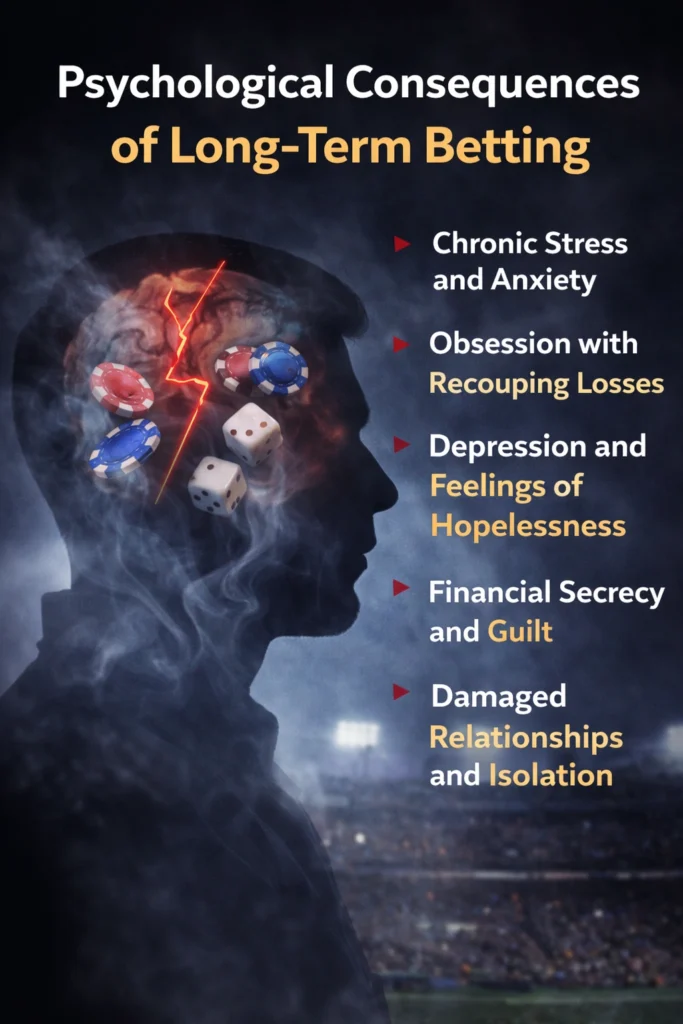
Beyond financial risk, the psychological impact of using a Sport Betting ID can be significant.
1. Addiction Risk
Online betting is designed to keep users engaged. Features such as live betting, instant notifications, and quick settlement of bets create a fast reward cycle.
This continuous cycle can lead to compulsive behavior. Over time, the user may feel an uncontrollable urge to place bets regularly.
Organizations like Gamblers Anonymous provide support for individuals struggling with gambling addiction, highlighting how serious the issue has become worldwide.
2. Emotional Stress
Repeated losses can cause:
- Anxiety
- Irritability
- Sleep problems
- Feelings of guilt
- Depression
Financial pressure combined with emotional attachment to sports outcomes can intensify stress levels.
3. Relationship Damage
Many individuals hide their betting activities from family members. Secrecy can damage trust in relationships. Financial losses may also create conflicts within households.
The Impact of Live Betting on Decision-Making
Live or in-play betting has dramatically increased the intensity of online wagering.
Instead of waiting for a match to end, users can bet on:
- The next goal
- The next wicket
- The next point
- The final score
While this seems exciting, it reduces decision-making time. Quick decisions are often emotional rather than logical.
Under pressure, users are more likely to:
- Ignore risk assessment
- Increase bet amounts impulsively
- Place multiple bets within minutes
This fast-paced environment increases financial exposure significantly.
Data Privacy and Security Risks
When creating a Sport Betting ID, users share:
- Personal identification details
- Banking information
- Contact numbers
- Email addresses
If the platform lacks proper encryption and cybersecurity standards, this data can be exposed to hackers.
Data breaches may result in:
- Identity theft
- Unauthorized transactions
- Phishing attacks
- Financial fraud
Unregulated platforms are especially vulnerable to such risks.
The Illusion of Control
One of the most dangerous psychological traps in sports betting is the illusion of control.
Users may believe:
- They understand team strategies better than others.
- Their experience gives them an advantage.
- A winning streak proves their skill.
However, sports events remain unpredictable. Unexpected red cards, last-minute goals, weather changes, or player injuries can completely change outcomes.
The belief that one can “control” results through knowledge often leads to overconfidence and larger wagers.
Social Impact of Sport Betting ID Platforms
The rise of the Sport Betting ID system has not only changed individual behavior but also influenced society on a broader scale. What was once limited to betting shops and physical bookmakers is now available to anyone with a smartphone and internet access. This shift has created ripple effects across families, communities, and even professional sports.
1. Increased Exposure Among Youth
One of the biggest concerns is the growing exposure of young people to online betting culture. Through social media ads, sports sponsorships, and influencer promotions, betting is often portrayed as normal and exciting.
Teenagers and young adults, who are naturally more prone to risk-taking behavior, may view creating a Sport Betting ID as a harmless activity. The problem is that early exposure increases the risk of long-term gambling habits.
2. Financial Instability in Households
When betting becomes frequent, household finances can suffer. Money meant for savings, education, rent, or family expenses may be diverted toward betting activities.
In extreme cases, individuals may:
- Borrow from friends and family
- Take personal loans
- Use credit cards irresponsibly
- Sell personal assets
These decisions can destabilize entire families, not just the individual bettor.
3. Growth of Illegal Betting Networks
In countries where online betting is restricted, underground betting markets often flourish. Instead of regulated systems, unlicensed agents operate informally.
These illegal networks:
- Avoid taxation
- Offer no consumer protection
- Increase the risk of fraud
- May be linked to criminal activities
The absence of regulation makes users even more vulnerable.
Influence of Advertising and Sponsorships
Modern sports betting platforms invest heavily in marketing. From stadium banners to television commercials and social media campaigns, betting brands are everywhere.
Major global betting brands like Bet365 and William Hill have historically partnered with sports leagues and teams, increasing brand visibility.
Advertising strategies often include:
- Celebrity endorsements
- “Risk-free” bet promotions
- Welcome bonuses
- Cashback offers
- Influencer marketing campaigns
These advertisements focus on big wins and success stories. Rarely do they highlight long-term losses or addiction risks.
The glamorization of betting can distort public perception, making it appear less risky than it actually is.
The Myth of Guaranteed Winning Strategies
A common trend among Sport Betting ID users is the search for guaranteed systems.
Online forums and Telegram groups often promote:
- “100% sure predictions”
- Insider tips
- Fixed match information
- VIP betting signals
In reality, most of these services are scams. They exploit desperate bettors who are trying to recover losses.
There is no guaranteed method in sports betting. Even experienced analysts cannot eliminate uncertainty. Any platform or individual promising fixed outcomes should be treated with extreme caution.
Responsible Gambling Tools: Are They Enough?
Many regulated betting platforms claim to promote responsible gambling. They may offer:
- Deposit limits
- Self-exclusion options
- Cooling-off periods
- Reality checks (time reminders)
While these tools can help, they depend on the user’s self-control. An individual already struggling with addiction may not voluntarily activate these protections.
Additionally, offshore or unlicensed platforms often do not provide meaningful responsible gambling features at all.
Economic Benefits vs Social Costs
Supporters of legalized sports betting argue that it contributes to the economy through:
- Tax revenue
- Job creation
- Technology investment
- Sports sponsorship funding
For example, companies like DraftKings have created thousands of jobs in regulated markets.
However, the social costs must also be considered:
- Increased addiction treatment expenses
- Family financial crises
- Mental health burdens
- Regulatory enforcement costs
Governments must balance economic gains with long-term societal impact.
Warning Signs That Betting Is Becoming a Problem
Anyone using a Sport Betting ID should watch for warning signs such as:
- Betting more than planned
- Feeling anxious when not betting
- Hiding betting history from loved ones
- Lying about losses
- Constantly thinking about upcoming matches
- Neglecting work or responsibilities
Recognizing these signs early can prevent serious consequences.
Practical Steps for Staying Safe
If someone chooses to engage in sports betting despite the risks, certain precautions can reduce harm:
- Treat betting strictly as entertainment, not income.
- Set a fixed monthly limit and never exceed it.
- Avoid betting under emotional stress.
- Never borrow money to gamble.
- Avoid alcohol while betting.
- Withdraw winnings instead of reinvesting them immediately.
- Take regular breaks from betting platforms.
Discipline and self-awareness are essential.
Final Reflection: Is a Sport Betting ID Worth the Risk?
A Sport Betting ID offers convenience, excitement, and the possibility of winning money. But it also opens the door to financial instability, emotional stress, addiction, and legal complications.
The digital nature of modern betting removes traditional barriers and increases accessibility. With 24/7 availability and instant transactions, it becomes easier than ever to fall into harmful patterns.
Sports betting is not inherently evil, but it is inherently risky. The key lies in awareness, control, and responsible decision-making. For many individuals, the safest financial decision may be to avoid creating a Sport Betting ID altogether.
Before registering, depositing, or placing a bet, it is important to understand one simple truth:
The system is designed for the house to win in the long run.
And no excitement, bonus, or temporary victory changes that mathematical reality.
The Long-Term Reality of a Sport Betting ID: Why High Activity Leads to Higher Risk
When discussing a Sport Betting ID, it is important to understand one core principle: the more frequently a Sport Betting ID is used, the greater the long-term exposure to financial and psychological risk. A Sport Betting ID is not just an account — it is an entry point into a system built on probability, data analytics, and structured profit margins.
Many users believe that careful planning can turn a Sport Betting ID into a steady income source. However, the statistical structure behind every Sport Betting ID platform ensures that long-term profitability favors the bookmaker, not the bettor.
Why Frequent Use of a Sport Betting ID Increases Loss Probability
Every time a user logs into a Sport Betting ID and places a bet, they participate in a probability-based system. Occasional wins may create confidence, but repeated use of a Sport Betting ID increases exposure to the house edge.
The mathematics is simple:
- The more bets placed through a Sport Betting ID
- The higher the total amount wagered
- The greater the impact of the bookmaker’s margin
Over time, the built-in edge embedded in every Sport Betting ID platform works consistently against the user.
Even skilled bettors cannot fully eliminate this structural disadvantage.
Sport Betting ID and the Illusion of Control
A common psychological trap connected to a Sport Betting ID is the illusion of control. Users often believe:
- “My Sport Betting ID strategy is working.”
- “I understand sports better than the bookmaker.”
- “This Sport Betting ID will help me recover my losses.”
However, no Sport Betting ID gives the user inside control over unpredictable events such as injuries, referee decisions, weather conditions, or last-minute performance changes.
The Sport Betting ID platform adjusts odds dynamically using advanced algorithms. This means that by the time odds are visible on a Sport Betting ID dashboard, they already reflect large amounts of statistical modeling and betting behavior.
High-Risk Behaviors Linked to Sport Betting ID Usage
Certain patterns indicate dangerous reliance on a Sport Betting ID:
- Logging into a Sport Betting ID multiple times per day.
- Increasing deposit amounts after losses on a Sport Betting ID.
- Using credit or borrowed money to fund a Sport Betting ID.
- Opening multiple Sport Betting ID accounts on different platforms.
- Believing that a new Sport Betting ID will “reset” losing patterns.
These behaviors significantly increase financial vulnerability.
Sport Betting ID and Chasing Losses
One of the most destructive behaviors associated with a Sport Betting ID is chasing losses.
The cycle often looks like this:
- A user deposits $50 into a Sport Betting ID.
- The first bet loses.
- The user deposits another $100 into the same Sport Betting ID.
- The second bet also loses.
- The user increases the wager to recover the total loss.
This pattern can escalate rapidly. The Sport Betting ID becomes a tool not for entertainment, but for emotional recovery attempts.
Unfortunately, probability does not respond to emotion.
The Digital Design of Sport Betting ID Platforms
Modern Sport Betting ID platforms are intentionally designed to maximize engagement. Features include:
- Push notifications
- Flash odds updates
- Live betting options
- One-click re-betting
- Instant balance refresh
Each feature encourages repeated interaction with the Sport Betting ID. The easier it is to place a bet, the less time the brain has to evaluate risk logically.
This design structure is similar to other high-engagement digital systems that rely on user repetition.
Multiple Sport Betting ID Accounts: A Growing Trend
Some users create multiple Sport Betting ID accounts across different platforms such as:
- Bet365
- 1xBet
- DraftKings
The logic behind multiple Sport Betting ID accounts is often to chase better odds or bonuses. However, this increases:
- Total financial exposure
- Tracking difficulty
- Emotional pressure
- Risk of overspending
Managing one Sport Betting ID responsibly is already challenging. Managing multiple Sport Betting ID accounts multiplies the risk.
Sport Betting ID and Long-Term Financial Drain
Even small daily bets placed through a Sport Betting ID accumulate over time.
For example:
- $10 per day equals $300 per month.
- $300 per month equals $3,600 per year.
If losses exceed wins — which is statistically likely — the Sport Betting ID becomes a steady financial drain.
Most users do not calculate their total annual deposits into a Sport Betting ID. When reviewed honestly, the numbers can be shocking.
Emotional Dependency on a Sport Betting ID
Over time, some individuals begin associating emotional states with their Sport Betting ID activity.
They may:
- Feel excitement only when logged into their Sport Betting ID.
- Feel restless when not checking odds on their Sport Betting ID.
- Use their Sport Betting ID to escape stress or boredom.
This emotional dependency increases the risk of compulsive gambling behavior.
Support organizations such as Gamblers Anonymous highlight how repeated digital betting activity can develop into addiction when boundaries disappear.
Legal Oversight and Sport Betting ID Regulation
In regulated markets, a Sport Betting ID must comply with rules set by authorities such as the UK Gambling Commission. These regulations include identity verification, anti-money laundering checks, and responsible gambling features.
However, many Sport Betting ID providers operate under offshore licenses with minimal oversight. In such cases:
- Dispute resolution may be weak.
- Consumer protection may be limited.
- Account suspension may occur without explanation.
Before opening a Sport Betting ID, understanding regulatory protection is essential.
The Reality: A Sport Betting ID Is Not a Guaranteed Income Tool
A Sport Betting ID is often marketed as an opportunity. In reality, it is a participation account in a high-risk financial activity.
No Sport Betting ID removes uncertainty.
No Sport Betting ID guarantees consistent profit.
No Sport Betting ID eliminates emotional pressure.
While short-term wins are possible, long-term sustainability is statistically unlikely for the average user.
Final Warning on High-Frequency Sport Betting ID Use
The most important factor in evaluating a Sport Betting ID is frequency.
Occasional, controlled betting with strict limits may reduce harm. However, high-frequency usage of a Sport Betting ID dramatically increases:
- Financial loss probability
- Emotional stress
- Addiction risk
- Long-term regret
Before logging into a Sport Betting ID again, ask:
- Am I betting for entertainment only?
- Can I afford to lose this amount entirely?
- Would I be comfortable showing my Sport Betting ID history to my family?
Honest answers reveal the true relationship between the user and their Sport Betting ID.
In the end, a Sport Betting ID is a tool. Whether it becomes entertainment or a source of harm depends entirely on discipline, awareness, and self-control.
But one fact remains constant:
The system behind every Sport Betting ID is built to ensure the house survives — and profits — over time.
Sport Betting ID and the Reality of Long-Term Outcomes
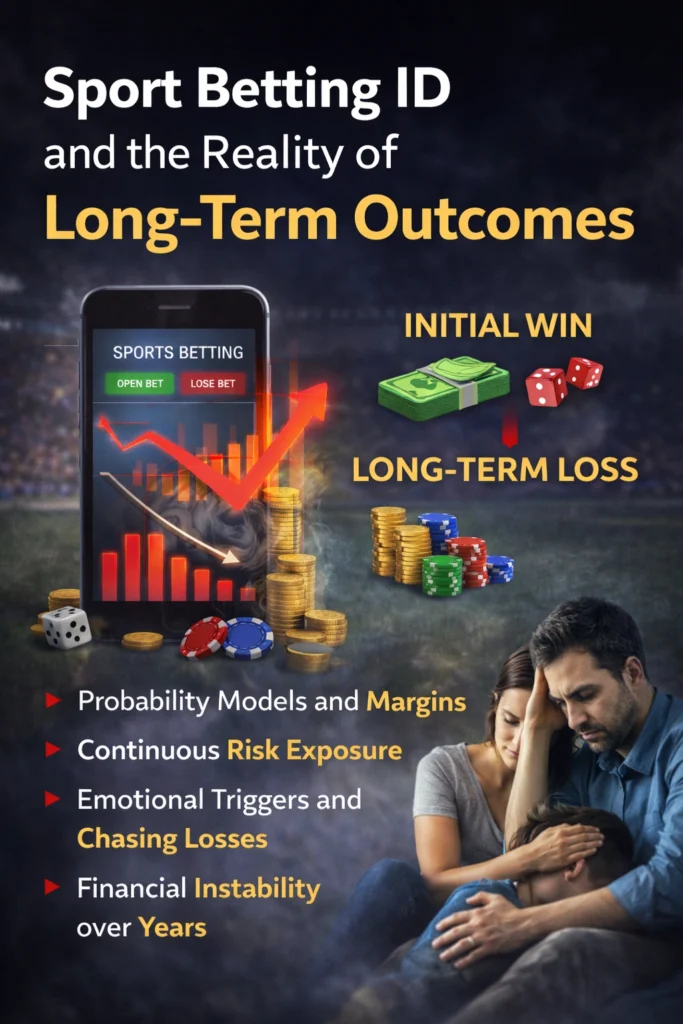
As the use of a Sport Betting ID becomes more common, one truth becomes increasingly clear: most long-term users of a Sport Betting ID do not consistently profit. While marketing campaigns highlight big wins and jackpot stories, they rarely discuss the silent majority who gradually lose money over time.
A Sport Betting ID creates access to opportunity, but it also creates exposure to repeated financial risk. The longer a Sport Betting ID remains active and heavily used, the more likely it is that the overall balance will trend downward rather than upward.
Why Most Sport Betting ID Users Eventually Lose
There are several structural reasons why the average Sport Betting ID user struggles to maintain profit:
1. The Bookmaker Margin Never Disappears
Every bet placed through a Sport Betting ID includes a built-in margin for the platform. Even when a user wins occasionally, the margin ensures that over hundreds of bets, the platform retains advantage.
2. Emotional Betting Overrides Strategy
A Sport Betting ID gives instant access to betting markets. However, instant access often leads to impulsive decisions. Emotional betting — especially after a loss — reduces discipline.
3. Overconfidence After Wins
Winning streaks inside a Sport Betting ID can create false confidence. A few successful bets may encourage larger wagers, increasing financial exposure.
4. Continuous Engagement Features
Modern platforms such as Bet365 and DraftKings provide live betting, cash-out features, and constant notifications. These tools increase user activity inside a Sport Betting ID, which statistically increases total wagering volume — and risk.
Sport Betting ID and the Cash-Out Illusion
Many Sport Betting ID platforms promote the “cash-out” feature as a protective tool. It allows users to settle a bet before the match ends.
While this appears helpful, it often benefits the bookmaker more than the bettor. The cash-out value is calculated to maintain the platform’s margin. In many cases, the user accepts a lower payout out of fear of losing completely.
The cash-out button inside a Sport Betting ID may provide emotional comfort, but it does not remove the structural edge held by the bookmaker.
The Compounding Effect of Small Losses in a Sport Betting ID
Small losses inside a Sport Betting ID may not feel serious at first. A $10 or $20 loss seems manageable. However, repeated small losses accumulate over time.
Consider this pattern:
- Daily betting through a Sport Betting ID
- Minor losses each session
- Occasional wins that partially recover losses
- Gradual increase in bet size
Over months or years, the total financial drain becomes substantial. Many users never calculate their lifetime deposits into a Sport Betting ID account.
The compounding effect of repeated betting is one of the most underestimated dangers.
Sport Betting ID and Mental Fatigue
Frequent activity within a Sport Betting ID can lead to mental fatigue. Constantly analyzing odds, checking scores, and tracking bets requires cognitive energy.
Users may experience:
- Difficulty concentrating
- Obsession with match schedules
- Stress during live games
- Emotional highs and lows
Over time, a Sport Betting ID stops being entertainment and starts becoming a mental burden.
The Role of Regulation in Sport Betting ID Protection
In regulated regions, authorities such as the UK Gambling Commission impose strict rules on Sport Betting ID providers. These rules may include:
- Identity verification
- Anti-money laundering checks
- Responsible gambling tools
- Transparent terms and conditions
However, many Sport Betting ID platforms operate offshore under loose regulations. Users of such platforms may not receive adequate protection if disputes occur.
Choosing a regulated Sport Betting ID provider reduces risk but does not eliminate financial loss probability.
Can a Sport Betting ID Be Used Responsibly?
Yes — but only under strict discipline.
Responsible use of a Sport Betting ID includes:
- Setting fixed deposit limits
- Accepting losses without chasing
- Avoiding betting during emotional stress
- Treating betting purely as entertainment
- Never viewing a Sport Betting ID as a primary income source
The moment a Sport Betting ID becomes a solution for financial problems, risk levels increase dramatically.
The Long-Term Question Every Sport Betting ID User Must Ask
Before continuing to use a Sport Betting ID, consider the following:
- If I review my Sport Betting ID history over one year, am I in profit or loss?
- How much total money have I deposited into my Sport Betting ID?
- Has my Sport Betting ID usage increased over time?
- Do I feel emotional pressure related to my Sport Betting ID balance?
Honest self-evaluation is essential.
Final Perspective on Sport Betting ID Sustainability
A Sport Betting ID is designed to provide easy access to sports wagering. It delivers convenience, excitement, and potential short-term rewards. However, sustainability is the real issue.
The structure behind every Sport Betting ID ensures:
- The bookmaker retains a mathematical edge.
- High-frequency betting increases loss probability.
- Emotional involvement influences financial decisions.
While disciplined users may manage risk temporarily, the majority of high-activity Sport Betting ID users experience long-term losses.
The most powerful step any individual can take is awareness. Understanding how a Sport Betting ID operates — financially, psychologically, and legally — allows better decision-making.
In the end, the decision to continue using a Sport Betting ID should not be based on excitement or short-term wins, but on realistic evaluation of long-term outcomes.
Because in probability-based systems, time is rarely on the bettor’s side.
Sport Betting ID and the Cycle of Dependency
As the use of a Sport Betting ID becomes more frequent, many users unknowingly enter a behavioral cycle. At first, a Sport Betting ID feels like entertainment. Over time, however, it can evolve into a routine. Eventually, for some individuals, that routine turns into dependency.
Understanding this cycle is critical.
Stage 1: Curiosity and Exploration
A person creates a Sport Betting ID out of curiosity. They deposit a small amount and place a few bets. The experience feels exciting and harmless.
Stage 2: Engagement and Excitement
After a few wins, confidence increases. The Sport Betting ID starts to feel rewarding. The user begins checking odds daily, exploring new markets, and increasing bet frequency.
Stage 3: Emotional Attachment
Now the Sport Betting ID is more than an account — it becomes emotionally significant. Wins create euphoria. Losses cause frustration. The balance inside the Sport Betting ID starts affecting mood.
Stage 4: Compulsive Behavior
The user feels the need to log into their Sport Betting ID repeatedly. They may deposit more money than planned or chase losses. At this point, the Sport Betting ID controls behavior more than the user controls the Sport Betting ID.
Recognizing these stages early can prevent serious consequences.
Sport Betting ID and the False Hope of “One Big Win”
Many Sport Betting ID users continue betting because they believe a large win will solve everything. This belief is powerful and dangerous.
The thought process often sounds like:
- “One big win from my Sport Betting ID will recover all losses.”
- “If I hit a large parlay, I’ll stop using my Sport Betting ID.”
- “This next bet will change everything.”
However, large multi-bets (accumulators or parlays) have significantly lower probability of success. Sport Betting ID platforms highlight high potential payouts, but they rarely emphasize the low statistical likelihood of winning those bets.
The dream of a life-changing win keeps users active inside their Sport Betting ID — even after repeated losses.
Sport Betting ID and the Role of Technology
Technology plays a major role in the expansion of Sport Betting ID usage.
Modern features include:
- AI-driven odds adjustments
- Personalized betting suggestions
- Targeted promotions
- Data-driven bonus offers
- Instant deposit systems
Large operators such as Bet365 and 1xBet use advanced analytics to understand user behavior inside a Sport Betting ID.
If a user frequently bets on football, the Sport Betting ID dashboard may promote more football markets. If a user responds to bonuses, more bonuses appear.
This personalization increases engagement — and prolonged engagement increases exposure to loss.
The Financial Psychology Behind a Sport Betting ID
A Sport Betting ID does not feel like physical cash. This psychological separation reduces the pain of spending.
When money exists as a digital balance inside a Sport Betting ID:
- Losses may feel less real.
- Deposits feel like numbers, not currency.
- Rapid betting becomes easier.
This is known as “digital detachment.” Because users do not physically hand over money, they may underestimate total spending.
Reviewing bank statements alongside Sport Betting ID history often reveals a different financial reality than expected.
Sport Betting ID and Social Comparison
Social media has intensified the pressure around Sport Betting ID usage. Users often see screenshots of winning bets posted online.
Rarely do people share:
- Losing streaks
- Large cumulative losses
- Failed accumulator bets
This creates a distorted perception that others are consistently profiting from their Sport Betting ID accounts.
In reality, most bettors experience fluctuating or negative results over time.
When a Sport Betting ID Starts Affecting Daily Life
A Sport Betting ID becomes problematic when it begins influencing everyday decisions.
Warning indicators include:
- Planning daily schedules around match times
- Ignoring work responsibilities to track bets
- Avoiding social gatherings to monitor games
- Feeling anxious if unable to access a Sport Betting ID
If the account balance determines emotional stability, the risk of dependency is high.
Support groups such as Gamblers Anonymous exist because gambling-related harm is widespread and serious.
Legal and Financial Consequences of Misuse
In regulated markets overseen by authorities like the UK Gambling Commission, consumer protections exist. However, misuse of a Sport Betting ID can still lead to:
- Frozen accounts due to suspicious activity
- Delayed withdrawals
- Identity verification disputes
- Tax obligations on winnings
In unregulated markets, risks are even greater. A Sport Betting ID on an offshore platform may disappear without warning if the operator shuts down.
Users often underestimate legal and compliance risks until a problem arises.
Can Discipline Truly Control a Sport Betting ID?
Some argue that strict bankroll management can control risk. While discipline helps, it requires consistent self-control — something that weakens under emotional stress.
A Sport Betting ID remains a high-risk financial tool regardless of strategy. Even disciplined bettors are exposed to:
- Unexpected losing streaks
- Market volatility
- Probability variance
The key difference between controlled use and harmful use is awareness, limits, and honest self-monitoring.
The Ultimate Question: Entertainment or Escalation?
Every Sport Betting ID user must decide whether the account serves as limited entertainment or escalating risk.
Ask yourself:
- Do I use my Sport Betting ID occasionally, or daily?
- Has my deposit amount increased over time?
- Do losses affect my mental health?
- Would I be financially stable without my Sport Betting ID activity?
If honest answers create discomfort, that discomfort may signal a need for change.
Closing Insight
A Sport Betting ID is not inherently dangerous — but unchecked use of a Sport Betting ID can become harmful. The system is designed for engagement. The longer engagement continues, the higher the exposure.
Short-term wins are possible. Long-term consistent profit is statistically rare.
The most powerful decision is not about which bet to place next.
It is about whether continued reliance on a Sport Betting ID aligns with financial stability, emotional well-being, and long-term goals.
Because once the excitement fades, the numbers remain.
Sport Betting ID and the Long-Term Financial Reality Check
As we move deeper into understanding the structure of a Sport Betting ID, one important truth becomes impossible to ignore: long-term financial sustainability through a Sport Betting ID is extremely rare.
Many users focus on short-term outcomes — a win today, a loss tomorrow. However, the true impact of a Sport Betting ID can only be understood by looking at cumulative results over months or years.
A Sport Betting ID may show temporary profits. It may even display a positive balance during certain periods. But the overall lifetime calculation often tells a different story.
Lifetime Value of a Sport Betting ID Account
Most users never calculate:
- Total deposits made into a Sport Betting ID
- Total withdrawals taken from a Sport Betting ID
- Net profit or net loss over time
When these numbers are honestly compared, the majority of frequent Sport Betting ID users discover that they are operating at a net loss.
The structure behind every Sport Betting ID platform ensures:
- Odds include bookmaker margin
- Bonuses require repeated wagering
- High engagement increases betting frequency
The longer a Sport Betting ID stays active with consistent betting, the more exposure the user has to cumulative losses.
Sport Betting ID and the Trap of “Break-Even Thinking”
A common mindset among Sport Betting ID users is the idea of breaking even.
They think:
- “I just want to recover my losses.”
- “If my Sport Betting ID balance returns to zero, I will stop.”
This mindset often prolongs activity. Instead of accepting a manageable loss, the user continues betting in an attempt to reach psychological closure.
Unfortunately, the pursuit of break-even through a Sport Betting ID often results in deeper losses.
Accepting loss is difficult — but chasing recovery through the same system that caused the loss increases financial damage.
Sport Betting ID and Risk Escalation Over Time
When someone first opens a Sport Betting ID, they may start with small stakes. Over time, several changes often occur:
- Bet size gradually increases.
- Frequency of betting increases.
- Riskier multi-bets are placed.
- More markets are explored.
This progression is subtle. The user may not even notice the escalation.
A Sport Betting ID that began as casual entertainment can slowly transform into a high-risk financial activity.
The Mathematics Behind Repeated Betting
Every Sport Betting ID operates within probability theory.
If a platform maintains even a small margin — for example, 5% — then statistically:
- For every $1,000 wagered, the expected long-term loss may approach $50.
- For $10,000 wagered over time, the expected loss increases proportionally.
Even if short-term results vary, probability eventually stabilizes over a large sample of bets.
This is why high-frequency use of a Sport Betting ID increases risk exposure dramatically. The greater the volume of wagers, the more the mathematical edge impacts results.
Sport Betting ID and Emotional Cost Beyond Money
Financial loss is measurable. Emotional cost is not.
A Sport Betting ID can influence:
- Mood stability
- Sleep patterns
- Stress levels
- Focus and productivity
When a user checks their Sport Betting ID before sleeping or immediately after waking up, it may indicate emotional attachment.
When match outcomes directly affect personal mood, dependency risk increases.
Support networks like Gamblers Anonymous emphasize that gambling harm is not only about money — it is about mental well-being.
Sport Betting ID and the Reality of “Professional Betting”
Some individuals believe they can turn a Sport Betting ID into a professional income stream.
While professional bettors do exist, they represent a very small percentage of participants. They rely on:
- Advanced statistical modeling
- Strict bankroll management
- Arbitrage strategies
- Access to multiple regulated platforms
Even then, profitability is difficult and inconsistent.
For the average Sport Betting ID user, professional-level discipline and analysis are rarely maintained long term.
Platforms like Bet365 and DraftKings employ data scientists and algorithmic systems. Competing against institutional-level analytics using personal intuition is extremely challenging.
When a Sport Betting ID Stops Being Fun
Entertainment becomes harmful when:
- The user feels relief only after placing a bet.
- The Sport Betting ID balance controls emotional state.
- Losses trigger panic instead of acceptance.
- Financial goals are delayed due to betting activity.
At this point, the Sport Betting ID is no longer entertainment — it is financial exposure combined with psychological strain.
Recognizing this turning point is critical.
The Exit Strategy Most Users Never Plan
Many people create a Sport Betting ID with a clear entry plan — deposit, bet, win.
Very few create an exit plan.
An exit strategy could include:
- Closing the Sport Betting ID after reaching a set loss limit.
- Withdrawing and permanently deleting the account after a major win.
- Taking extended breaks from betting activity.
Without an exit plan, usage continues indefinitely.
And indefinite exposure increases cumulative risk.
The Core Truth About Sport Betting ID
A Sport Betting ID is a tool that connects individuals to a probability-driven financial system.
It provides:
- Instant access
- High engagement
- Emotional intensity
- Temporary rewards
But it also carries:
- Long-term statistical disadvantage
- Escalating financial exposure
- Psychological risk
- Potential social consequences
The system behind every Sport Betting ID is sustainable for the bookmaker because it is built on structured margins and user repetition.
The user’s sustainability depends entirely on discipline — and even discipline cannot eliminate the underlying mathematical edge.
Final Reflection Before Continuing
Before logging into a Sport Betting ID again, pause and reflect:
- If I stopped using my Sport Betting ID today, would my financial position improve over time?
- Has my Sport Betting ID usage aligned with my long-term financial goals?
- Am I in control of my Sport Betting ID, or is it influencing my decisions?
Awareness is the strongest protection.
Because in the long run, probability favors the platform — not the individual.
And understanding that reality may be the most valuable insight any Sport Betting ID user can have.
A Balanced Perspective on Online Sports Betting
After examining the financial structure, emotional patterns, and long-term outcomes associated with digital wagering accounts, it is important to step back and look at the bigger picture. Online sports betting is not automatically destructive, but it is inherently risky. The difference between controlled entertainment and harmful behavior often lies in awareness, limits, and personal discipline.
For some individuals, placing an occasional wager adds excitement to watching a match. They set a small entertainment budget, accept losses calmly, and never treat betting as a source of income. In such cases, the activity remains contained and does not interfere with financial stability or mental health.
However, the risk increases when expectations shift. Problems usually begin when betting moves from entertainment to solution — a solution for boredom, financial pressure, or emotional stress. At that point, decision-making becomes reactive rather than rational.
Understanding Risk Versus Reward
Every financial risk carries a potential reward. The key question is whether the reward justifies the probability of loss.
In sports wagering:
- Outcomes are uncertain.
- Odds include built-in margins.
- Emotional influence affects decisions.
Unlike long-term investment strategies based on asset growth or economic fundamentals, betting outcomes rely on unpredictable events within limited time frames. A single injury, referee decision, or unexpected performance shift can reverse expectations instantly.
This unpredictability is what makes the activity exciting — but also unstable.
The Importance of Personal Financial Boundaries
Clear boundaries are essential for anyone participating in wagering activities. Healthy boundaries include:
- Allocating only disposable income
- Never borrowing money to fund bets
- Setting strict time limits
- Avoiding participation during emotional stress
If these boundaries begin to weaken, that is often the first warning sign.
Financial health depends on consistency, planning, and controlled risk exposure. Activities that introduce repeated high-variance outcomes should always be approached cautiously.
Emotional Awareness Matters
Beyond money, emotional awareness plays a crucial role.
Ask yourself:
- Does this activity improve my mood overall?
- Do losses create stress that lingers beyond the event?
- Do I think about betting when I should be focusing on other responsibilities?
If emotional impact outweighs entertainment value, it may be time to reassess involvement.
Organizations such as Gamblers Anonymous exist because many individuals struggle to recognize when casual participation shifts into dependency. Seeking guidance is not weakness; it is responsibility.
The Role of Regulation and Consumer Protection
In some countries, authorities attempt to protect consumers through licensing systems and oversight. For example, the UK Gambling Commission enforces standards related to transparency, age verification, and responsible gambling tools.
While regulation improves safety standards, it does not remove financial risk. Legal oversight can reduce fraud and unethical practices, but it cannot change probability.
Understanding this distinction is important. Safety mechanisms reduce harm — they do not guarantee profit.
Making Informed Choices
Ultimately, participation in online sports wagering is a personal decision. The most important factor is informed choice.
An informed choice means:
- Understanding that long-term profit is statistically uncommon
- Accepting that losses are part of the system
- Recognizing emotional triggers
- Knowing when to stop
When expectations are realistic, the likelihood of serious harm decreases.
A Final Thought
Sports bring excitement, passion, and connection. Adding financial stakes can intensify that experience, but it also introduces volatility. For some, limited participation remains entertainment. For others, it gradually becomes pressure.
The key is balance.
Financial security, mental clarity, and long-term stability should always take priority over short-term thrills. If an activity begins to threaten those foundations, stepping back is not failure — it is wisdom.
In the end, the smartest move is not always the next wager.
Sometimes, it is the decision to walk away.
Building a Healthier Relationship With Risk
Every form of gambling, including online sports wagering, revolves around risk. The difference between controlled participation and harmful involvement is not luck — it is structure, awareness, and restraint.
Risk itself is not the enemy. Poorly managed risk is.
Many financially stable individuals engage in controlled recreational betting without serious consequences because they apply strict personal rules. They treat losses as the cost of entertainment, similar to buying a movie ticket or attending a live event. The amount spent is predetermined and never recovered through chasing behavior.
Problems begin when boundaries blur.
The Power of Self-Assessment
One of the most effective tools any individual can use is periodic self-evaluation.
Consider reviewing:
- Total deposits over the past six months
- Total withdrawals during the same period
- Net gain or loss
- Time spent tracking games or markets
If the numbers create discomfort, that discomfort is valuable feedback.
Financial clarity removes illusion. When activity is viewed through data instead of emotion, decision-making becomes more rational.
Opportunity Cost: The Hidden Factor
There is another concept many people overlook — opportunity cost.
Money and time spent on wagering could alternatively be used for:
- Savings and investments
- Skill development
- Business ideas
- Fitness and health
- Family experiences
Even small, consistent amounts redirected toward long-term growth can compound significantly over time.
The real question becomes:
Is the short-term excitement worth the long-term opportunity being sacrificed?
Recognizing the Tipping Point
There is often a subtle moment when entertainment crosses into unhealthy territory. The tipping point might look like:
- Checking odds before completing work tasks
- Feeling relief only after placing a bet
- Becoming defensive when questioned about spending
- Hiding transaction history
When secrecy increases, risk often increases as well.
Acknowledging this early can prevent larger consequences later.
Support Systems and Open Conversations
Open discussion reduces stigma. Many individuals hesitate to talk about betting-related stress due to embarrassment. However, financial strain and gambling-related anxiety are more common than publicly acknowledged.
Organizations such as Gamblers Anonymous provide confidential peer support for individuals seeking change. In regulated markets, consumer protection frameworks overseen by bodies like the UK Gambling Commission also encourage responsible participation.
Seeking support demonstrates strength, not weakness.
Redefining Entertainment
Sports themselves offer excitement without financial risk. The emotional highs of competition, team loyalty, and shared viewing experiences exist independently of wagers.
For some individuals, removing financial stakes can restore pure enjoyment of the game. Without monetary pressure, watching sports becomes less stressful and more social.
This shift can significantly improve mental balance.
Long-Term Stability Over Short-Term Thrill
Short-term thrill is intense but temporary. Long-term stability is quieter but far more valuable.
Financial resilience is built on:
- Consistent saving
- Controlled spending
- Risk awareness
- Strategic planning
Activities with unpredictable outcomes should never undermine those foundations.
When evaluating any high-risk behavior, the central question remains:
Does this strengthen my long-term position, or weaken it?
A Closing Reflection
Online sports betting platforms are designed to be engaging, fast, and convenient. They are engineered to hold attention. That design does not automatically make them harmful — but it does require mindful participation.
Balance is the deciding factor.
If involvement remains limited, transparent, and financially controlled, the risk stays contained. If it becomes frequent, emotionally driven, or financially pressured, the consequences can grow quietly over time.
At every stage, the power of decision rests with the individual.
The most valuable bet anyone can make is not on a match result —
it is on their own long-term stability, clarity, and financial health.
Reclaiming Control and Moving Forward
At some point, every person involved in online wagering faces a simple but powerful question: Is this adding value to my life, or quietly taking it away?
Answering that question honestly can change everything.
For many, the turning point does not come after a massive loss. It comes after reflection. A moment of clarity. A realization that time, energy, and focus have been drifting toward something that does not truly build long-term stability.
That awareness is not defeat — it is growth.
Practical Steps Toward Regaining Balance
If someone feels their betting activity has become excessive, small but firm actions can restore control:
- Take a voluntary break for 30 days.
- Review financial statements in detail.
- Set strict spending caps moving forward.
- Remove betting apps from mobile devices.
- Turn off promotional notifications and emails.
Distance creates perspective. When constant exposure is reduced, emotional intensity also decreases.
Rebuilding Financial Confidence
If losses have occurred, the best recovery plan is rarely another wager. Instead, it involves rebuilding steadily:
- Create a clear monthly budget.
- Prioritize essential expenses.
- Establish an emergency fund.
- Focus on stable income sources.
- Track spending honestly.
Financial repair is not dramatic — it is consistent. Over time, steady habits restore security and peace of mind.
Strengthening Mental Resilience
Mental strength grows when impulses are managed rather than followed. Resisting the urge to act emotionally builds discipline that applies far beyond gambling.
Healthy alternatives for stimulation and challenge include:
- Fitness training
- Skill learning
- Competitive sports participation
- Business or investment education
- Creative hobbies
These activities provide progress-based satisfaction rather than outcome-based spikes of excitement.
The Importance of Transparency
Secrecy fuels stress. Openness reduces it.
Talking to a trusted friend, partner, or advisor about financial habits can create accountability. Many people discover that simply discussing concerns removes much of the emotional weight.
If gambling behavior feels difficult to control alone, structured support systems exist for guidance and recovery. Seeking help is a proactive decision, not an admission of failure.
Redefining Success
True success is not defined by a lucky win or a temporary payout. It is defined by:
- Financial stability
- Emotional balance
- Clear decision-making
- Freedom from compulsive pressure
Short-term thrills fade quickly. Long-term control lasts.
A Final Word
Online betting platforms are built to offer speed, convenience, and excitement. That design will not change. What can change is how an individual interacts with that system.
Choosing moderation.
Choosing awareness.
Choosing limits.
Or choosing to step away entirely.
The most powerful move is not predicting the next outcome.
It is protecting your future before risk becomes regret.
In the end, stability will always outperform volatility.
The Long-Term Vision: Choosing Stability Over Uncertainty
As this discussion comes to a close, the most important takeaway is not about platforms, odds, or strategies. It is about direction.
Every financial decision shapes long-term outcomes. Some decisions build structure, security, and progress. Others introduce volatility, uncertainty, and emotional fluctuation. The key difference lies in sustainability.
Short bursts of excitement can feel powerful. A winning moment can create a surge of confidence. But sustainable growth — financially and emotionally — rarely comes from unpredictable systems. It comes from patience, planning, and disciplined habits repeated over time.
Understanding Personal Responsibility
No platform forces participation. No advertisement makes a final decision. At the end of the process, the responsibility rests with the individual.
That responsibility includes:
- Knowing personal limits
- Recognizing emotional triggers
- Accepting losses without escalation
- Walking away when necessary
Self-control is not about restriction — it is about protection.
When a person protects their finances, they protect their future opportunities. When they protect their emotional balance, they protect their relationships and productivity.
The Bigger Picture of Financial Growth
Wealth accumulation in the real world typically follows predictable principles:
- Controlled risk
- Diversification
- Long-term compounding
- Skill development
- Consistent income generation
High-variance activities do not usually align with those principles. While occasional entertainment spending is normal, relying on uncertain outcomes as a financial plan creates instability.
The difference between entertainment and strategy must remain clear.
Clarity Creates Confidence
When decisions are based on clear understanding rather than impulse, stress decreases. There is no need to chase, no need to recover, and no need to hide.
Clarity allows a person to say:
- “This is entertainment, and I will limit it.”
or - “This no longer serves me, and I will step away.”
Both responses demonstrate control.
Protecting What Truly Matters
Financial setbacks can be repaired. Emotional strain can be managed. But repeated exposure to high-risk systems increases the chances of deeper consequences.
Protecting what truly matters means prioritizing:
- Long-term security
- Mental health
- Family stability
- Professional growth
Excitement is temporary. Stability is lasting.
Final Reflection
In uncertain systems, the advantage rarely belongs to the participant. Over time, probability favors structure, not impulse.
The strongest position any individual can take is one of awareness.
Pause before acting.
Evaluate before committing.
Step back before escalating.
Because the greatest return is not found in a single outcome —
it is found in building a life that does not depend on one.
Conclusion: Awareness Is the Real Advantage
After understanding the structure, psychology, and long-term financial impact of a Sport Betting ID, one truth becomes clear: awareness is the only real edge a user can have.
Online platforms are designed for engagement. They are built on probability models, structured margins, and repeated participation. While short-term wins are possible, long-term sustainability favors the system itself. That is not an opinion — it is how probability-based platforms operate.
Many users enter this space through popular cricket and tournament-focused websites such as t20worldcup, where major events attract massive attention and betting activity increases sharply. The excitement of global tournaments often encourages new registrations and higher wagering volumes. However, excitement does not change mathematics.
Similarly, various betting-related platforms like iplsatta promote opportunities around league matches and seasonal events. While such platforms may appear attractive, the responsibility of financial control always remains with the individual. No website can replace personal discipline.
The real advantage is not inside the odds, the bonuses, or the promotional offers. The real advantage is clarity.
Clarity means:
- Understanding that losses are statistically normal.
- Accepting that chasing recovery increases risk.
- Recognizing emotional triggers before they escalate.
- Setting limits before activity begins — not after damage occurs.
When a person operates with awareness, they reduce impulsive decisions. When they understand how the system works, they are less likely to believe in unrealistic promises or guaranteed strategies.
Short-term excitement can be powerful. A single win can create confidence. But long-term financial strength is built through stability, planning, and controlled risk exposure — not unpredictable outcomes.
At the end of the day, the strongest position any individual can take is informed control.
Know the system.
Know your limits.
Know when to step back.
Because awareness — not chance — is the only sustainable advantage.
Frequently Asked Questions (FAQ)
1. What is a Sport Betting ID?
A Sport Betting ID is a registered online account that allows users to place wagers on sports events through digital betting platforms. It provides access to deposit options, betting markets, odds, bonuses, and withdrawal features.
2. Is creating a Sport Betting ID legal?
The legality depends on the country or state where you live. Some regions regulate online sports betting under government authorities, while others restrict or ban it. Before registering, always check your local gambling laws and regulations.
3. Can I earn consistent income with a Sport Betting ID?
Consistent long-term income from sports betting is statistically rare. Betting platforms operate with built-in profit margins, meaning the system favors the bookmaker over time. While short-term wins are possible, relying on betting as a stable income source carries significant risk.
4. Why do most users lose money over time?
Most users lose due to:
- The bookmaker’s built-in margin
- Emotional decision-making
- Chasing losses
- Increasing bet size after wins
- High-frequency betting
Over a large number of bets, probability tends to favor the platform.
5. What is “chasing losses”?
Chasing losses happens when a person places larger or repeated bets to recover money they previously lost. This behavior increases financial risk and often leads to deeper losses instead of recovery.
6. Are bonus offers and free bets really beneficial?
Bonuses may appear attractive, but they usually come with wagering requirements. This means users must place multiple bets before withdrawing any bonus-related winnings. Many people lose their balance before meeting these conditions.
7. How can I use a betting account responsibly?
Responsible participation includes:
- Setting strict deposit limits
- Never borrowing money to bet
- Treating betting as entertainment, not income
- Taking regular breaks
- Avoiding emotional betting
Self-control and financial awareness are essential.
8. What are the warning signs of gambling addiction?
Common warning signs include:
- Betting more than planned
- Feeling anxious when not betting
- Hiding betting activity
- Borrowing money for gambling
- Neglecting work or family responsibilities
If these signs appear, seeking support is highly recommended.
9. Can I close my betting account permanently?
Yes. Most regulated platforms offer account closure or self-exclusion options. You can request permanent closure or a temporary suspension if you want to step away.
10. What should I do if betting is affecting my mental health?
If betting is causing stress, anxiety, or financial pressure, consider:
- Taking an immediate break
- Speaking openly with a trusted person
- Contacting professional support organizations
- Seeking counseling if necessary
Early action can prevent long-term consequences.
11. Is online betting safe from fraud?
Safety depends on the platform’s regulation and security standards. Unlicensed or offshore websites may pose higher risks, including delayed withdrawals or data misuse. Always verify licensing information before registering.
12. What is the most important thing to remember before betting?
The most important thing to remember is that sports betting is a high-risk activity built on probability. Losses are normal, and long-term profit is not guaranteed. Always prioritize financial stability and emotional well-being over short-term excitement.
 Get WhatsApp ID Now