

Introduction
Online betting platforms have rapidly reshaped the global gambling landscape, turning what was once a location-based activity into a borderless digital experience. With just a smartphone and an internet connection, users can access thousands of betting markets, casino games, and live events within seconds. This technological transformation has fueled massive growth, attracting millions of participants worldwide and generating billions in annual revenue.
The appeal is clear. Online betting platforms offer unmatched convenience, diverse wagering options, real-time updates, and attractive bonuses. From live sports betting to virtual casinos and esports tournaments, the digital environment delivers speed, variety, and accessibility that traditional betting venues simply cannot match. For many users, it represents entertainment, excitement, and the possibility of financial reward.
However, beneath the surface of innovation and opportunity lies a more complex reality. The same accessibility that makes online betting platforms appealing can also increase the risk of excessive gambling and financial loss. Questions surrounding regulation, data privacy, and responsible gaming practices continue to spark debate among policymakers, industry leaders, and social advocates.
As the industry continues to expand, understanding both its benefits and its risks becomes essential. Online betting platforms are not merely digital tools for wagering; they are powerful ecosystems shaped by technology, economics, psychology, and regulation. This article explores the opportunities, challenges, and evolving future of online betting platforms to provide a clear and balanced perspective on one of the fastest-growing sectors in the digital economy.
The Rapid Evolution of Online Betting Platforms
Online betting platforms did not emerge overnight. Their journey began in the mid-1990s when the internet first became accessible to the public. Early platforms were basic, offering limited sports markets and simple interfaces. Over time, rapid technological advancement transformed these primitive systems into sophisticated digital ecosystems capable of handling millions of transactions simultaneously.
The introduction of secure encryption technology played a crucial role in building user trust. As online payments became safer and more reliable, more people felt comfortable depositing money into digital accounts. Payment gateways, e-wallets, and later cryptocurrencies further streamlined the process, reducing transaction times and increasing global accessibility.
Mobile technology marked the next major breakthrough. The shift from desktop-only websites to mobile-optimized platforms and dedicated apps dramatically expanded user engagement. Today, a large percentage of online betting activity occurs via smartphones, allowing users to place bets from virtually anywhere.
Types of Online Betting Platforms
Online betting platforms are not limited to one format. They operate across several categories, each catering to different audiences and preferences.
1. Sports Betting Platforms
These platforms allow users to wager on sports events such as football, basketball, cricket, tennis, and more. They offer pre-match betting as well as live betting, where odds change dynamically during the event.
2. Online Casino Platforms
Online casinos replicate traditional casino experiences in a digital format. They include slot games, roulette, blackjack, baccarat, and live dealer games streamed in real time.
3. Poker Rooms
Dedicated poker platforms allow players to compete against one another rather than the house. Tournaments, cash games, and sit-and-go formats are common features.
4. Esports Betting Platforms
As competitive gaming has grown globally, esports betting has become increasingly popular. Users can place bets on professional gaming tournaments across titles like multiplayer battle games and first-person shooters.
5. Hybrid Platforms
Many modern operators combine sports betting, casino games, poker, and esports under one unified account system. This integrated approach increases user engagement and lifetime value.
Why Online Betting Platforms Are So Popular
The widespread adoption of online betting platforms is not accidental. Several key factors contribute to their growing popularity.
Instant Accessibility
Users can access their accounts 24/7. There are no physical barriers, opening hours, or travel requirements. This instant accessibility makes betting more convenient than ever before.
Real-Time Engagement
Live betting has significantly changed the user experience. Instead of placing a bet before a match and waiting for the outcome, users can react to in-game developments. This creates a dynamic and interactive environment.
Attractive Promotions
Welcome bonuses, free bets, cashback offers, and loyalty rewards are major incentives. These promotional tools attract new users and encourage repeat participation.
Global Reach
Online betting platforms operate across international markets, giving users access to events and games that may not be available locally. This global integration broadens the scope of betting opportunities.
The Psychology Behind Online Betting
Understanding why people engage with online betting platforms requires examining psychological factors.
The Thrill of Uncertainty
Human brains are naturally drawn to uncertainty and reward anticipation. The possibility of winning triggers dopamine release, reinforcing betting behavior.
Illusion of Control
Some users believe that knowledge of sports statistics or game strategies improves their chances of success. While skill may influence certain games, the house edge ensures long-term profitability for operators.
Instant Gratification
Online platforms provide immediate feedback. Wins are credited instantly, and losses occur just as quickly. This rapid reward cycle can increase emotional engagement.
Financial Mechanics of Online Betting Platforms
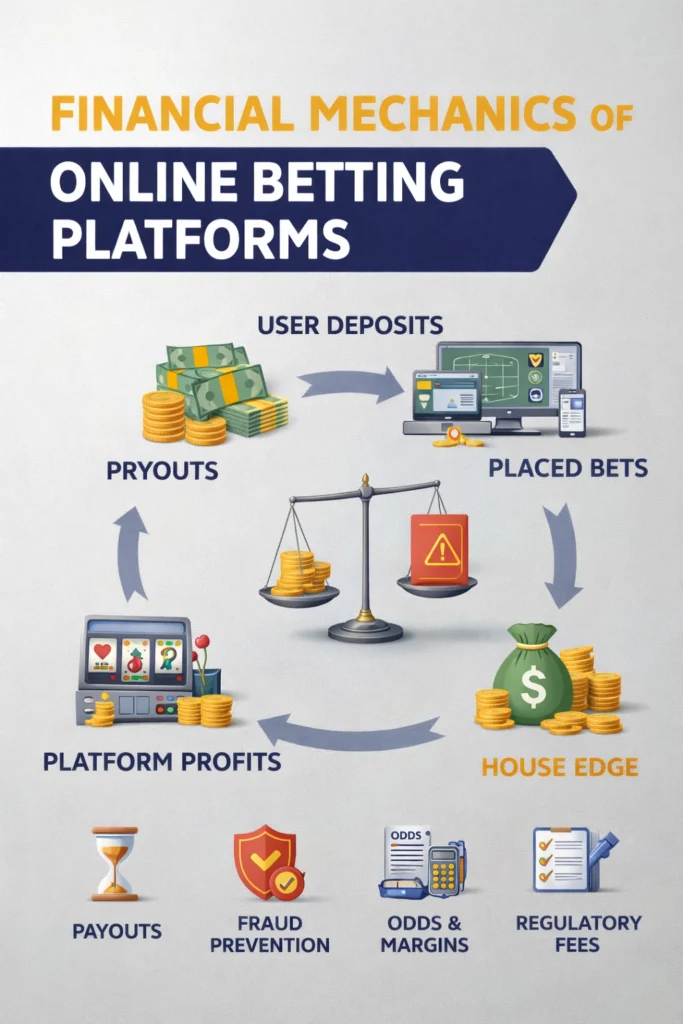
Behind the entertainment value lies a carefully structured business model designed to ensure operator profitability.
The House Edge
Online betting platforms embed a margin into their odds. This mathematical advantage guarantees long-term revenue regardless of short-term user wins.
Liquidity and Risk Balancing
Advanced software systems monitor betting patterns in real time. Operators adjust odds to balance exposure and minimize financial risk.
Revenue Streams
Beyond sports betting margins, platforms generate income through casino game commissions, tournament entry fees, advertising partnerships, and premium memberships.
The Regulatory Landscape
The legal framework surrounding online betting platforms varies widely.
Regulated Markets
In some countries, operators must obtain licenses, comply with strict consumer protection rules, and contribute tax revenue. These regulations aim to protect users from fraud and unfair practices.
Unregulated or Grey Markets
In other regions, online betting platforms operate with minimal oversight. This increases the risk of unreliable operators and potential exploitation.
Responsible Gambling Policies
Many licensed platforms implement safeguards such as deposit limits, cooling-off periods, and self-exclusion tools. These measures are designed to reduce problem gambling behavior.
Risks Associated with Online Betting Platforms
While the industry offers entertainment and economic benefits, risks remain significant.
Addiction Potential
Continuous availability, instant transactions, and immersive design can encourage compulsive behavior. The absence of physical boundaries makes it easier to lose track of time and money.
Financial Instability
Chasing losses is a common pattern among problem gamblers. This can lead to mounting debt and long-term financial stress.
Security Threats
Cyberattacks, phishing scams, and fraudulent platforms pose risks to users who fail to verify legitimacy.
Technology Shaping the Future
Online betting platforms continue to evolve with technological innovation.
Artificial Intelligence Integration
AI enhances fraud detection, personalizes user experiences, and monitors suspicious betting activity.
Blockchain Transparency
Blockchain-based betting platforms offer verifiable transactions and increased transparency, addressing trust concerns.
Virtual Reality Expansion
VR casinos aim to simulate physical gambling environments in immersive digital spaces, potentially redefining user engagement.
Social and Ethical Considerations
The rapid expansion of online betting platforms raises broader societal questions.
- Should advertising be restricted to protect vulnerable groups?
- How can governments balance tax revenue with public health concerns?
- What responsibility do operators have in preventing addiction?
These debates are ongoing and reflect the complex intersection of business, technology, and social responsibility.
Conclusion: Opportunity with Responsibility
Online betting platforms represent one of the most dynamic sectors in the digital economy. They combine technology, entertainment, and finance into a powerful ecosystem that continues to expand globally.
Yet, their growth comes with undeniable risks. The same convenience that attracts users can also lead to excessive behavior and financial harm. Regulation, responsible gambling practices, and user awareness are essential in ensuring that online betting remains a controlled form of entertainment rather than a destructive habit.
The future of online betting platforms will likely be shaped by stronger regulations, smarter technology, and greater public awareness. Whether they become a sustainable entertainment industry or a growing social concern depends on how responsibly all stakeholders — operators, regulators, and users — approach this evolving digital landscape.
The Economic Impact of Online Betting Platforms
Online betting platforms are not just entertainment hubs; they are powerful economic engines in many regions. In regulated markets, governments generate substantial tax revenue from licensing fees, betting duties, and corporate taxes. This revenue often supports public services such as healthcare, education, and infrastructure.
The industry also creates employment opportunities across multiple sectors. Technology developers, cybersecurity experts, data analysts, marketing professionals, customer support agents, compliance officers, and payment processing specialists all contribute to the ecosystem. As platforms expand globally, job creation extends beyond gambling itself into fintech and digital innovation.
However, the economic contribution is not purely positive. Critics argue that gambling-related harm can increase public spending on addiction treatment programs, debt counseling services, and social support systems. Policymakers must weigh tax income against potential long-term social costs.
Marketing Strategies Used by Online Betting Platforms
One major driver of growth is aggressive and strategic marketing. Online betting platforms invest heavily in advertising campaigns across television, social media, sports sponsorships, and influencer partnerships.
Sports Sponsorships
Many betting companies sponsor professional sports teams and leagues. Branding on jerseys, stadium banners, and broadcast advertisements increases visibility and credibility.
Welcome Bonuses and Promotions
Promotional incentives such as “Bet and Get” offers, risk-free bets, and deposit match bonuses are powerful customer acquisition tools. These promotions create urgency and encourage new users to register quickly.
Influencer and Affiliate Marketing
Affiliate marketing programs reward content creators and website owners for referring new users. Influencers often promote platforms through betting tips, match predictions, and tutorial content.
While these strategies drive growth, critics argue that constant exposure normalizes gambling behavior, particularly among younger audiences.
User Experience and Platform Design
Online betting platforms are designed to maximize engagement. User interface (UI) and user experience (UX) design play crucial roles in keeping users active.
Simple Registration Process
Quick sign-up procedures reduce friction. Many platforms allow registration within minutes, sometimes using social media integration.
Personalized Dashboards
Data analytics track user behavior and tailor recommendations. Favorite sports, frequent bet types, and preferred deposit methods are remembered for convenience.
Gamification Elements
Leaderboards, loyalty points, achievements, and VIP tiers create a sense of progression. These features mimic video game mechanics, encouraging longer sessions.
However, these same design strategies can contribute to excessive engagement, blurring the line between entertainment and compulsion.
Payment Methods and Financial Flexibility
The expansion of digital finance has directly supported the growth of online betting platforms.
Traditional Payment Options
Credit cards, debit cards, and bank transfers remain widely accepted. These methods offer familiarity and trust for most users.
E-Wallet Integration
Digital wallets enable faster deposits and withdrawals. Transactions are often processed within minutes, enhancing user satisfaction.
Cryptocurrency Adoption
Some platforms accept cryptocurrencies for greater anonymity and reduced transaction fees. Blockchain technology also improves transparency in certain cases.
Fast payment systems increase convenience but can also accelerate financial losses if users do not manage their budgets responsibly.
Data, Analytics, and Artificial Intelligence
Online betting platforms operate on data-driven models. Every click, bet, and transaction generates valuable information.
Behavioral Tracking
Algorithms analyze betting patterns to predict user preferences. Personalized promotions are then delivered based on historical behavior.
Fraud Detection Systems
AI tools monitor unusual activity to prevent money laundering, account takeovers, and bonus abuse.
Predictive Modeling
Odds are calculated using statistical models that factor in historical performance, player injuries, weather conditions, and betting volumes.
The use of big data strengthens operational efficiency but raises privacy concerns regarding how user information is stored and utilized.
Global Market Differences
The online betting industry does not operate uniformly worldwide.
Mature Markets
Countries with established regulations often have competitive but structured environments. Operators must comply with strict advertising rules and consumer protection standards.
Emerging Markets
In developing regions, internet expansion and mobile adoption are fueling rapid growth. However, regulatory frameworks may still be evolving.
Legal Restrictions
Some countries prohibit online betting entirely. In such areas, users may turn to offshore platforms, increasing exposure to unregulated services.
Understanding local laws is essential for both operators and users to ensure compliance and protection.
Responsible Gambling Initiatives
To address growing concerns, many operators have introduced responsible gambling tools.
Deposit and Loss Limits
Users can set daily, weekly, or monthly financial caps to prevent overspending.
Self-Exclusion Programs
Individuals struggling with gambling can voluntarily block access to their accounts for a fixed period.
Reality Checks
Periodic notifications remind users how long they have been active and how much they have spent.
While these features are valuable, their effectiveness depends on user awareness and willingness to use them.
Technological Innovations on the Horizon
The future of online betting platforms is closely linked to innovation.
Augmented Reality (AR)
AR features may integrate live sports viewing with interactive betting overlays.
Advanced Live Streaming
Improved streaming quality and multi-angle viewing could enhance in-play betting experiences.
Enhanced Cybersecurity
As cyber threats evolve, platforms will invest further in biometric authentication, multi-factor verification, and encryption upgrades.
Continuous innovation will shape the competitive landscape and user expectations.
Social Consequences and Public Perception
Public opinion regarding online betting platforms remains divided.
Supporters argue that regulated betting is a legitimate form of entertainment and personal choice. They emphasize economic contributions and technological advancement.
Opponents highlight addiction risks, financial hardship, and the targeting of vulnerable individuals. They advocate for stricter advertising controls and enhanced user protections.
This tension influences legislative decisions and shapes the future regulatory environment.
Balancing Innovation with Responsibility
Online betting platforms represent a powerful intersection of technology, finance, and entertainment. Their ability to adapt quickly to market trends and user preferences has fueled remarkable growth.
Yet sustainability depends on responsible practices. Operators must prioritize transparency, fair play, and user protection. Regulators must create balanced frameworks that encourage innovation while safeguarding public welfare. Users must approach betting with discipline and awareness.
The industry’s future will not be defined solely by profits or user numbers but by how effectively it manages risk alongside opportunity.
Final Reflection
Online betting platforms are neither entirely positive nor entirely negative. They offer excitement, convenience, and economic opportunity. At the same time, they carry significant financial and psychological risks.
Understanding both sides is crucial. When approached responsibly, online betting can remain a form of controlled entertainment. Without awareness and safeguards, it can quickly become a costly digital trap.
The ultimate outcome depends on informed decision-making, ethical business practices, and thoughtful regulation.
The Competitive Landscape of Online Betting Platforms

The online betting industry has become intensely competitive. Hundreds of operators compete for market share, each attempting to differentiate themselves through features, odds, promotions, and user experience. In saturated markets, competition drives innovation, but it also leads to aggressive marketing tactics and high promotional spending.
Established brands rely on trust, long-term reputation, and strong licensing credentials. New entrants often compete through larger welcome bonuses, creative betting features, and niche market specialization. This competition benefits users through better odds and improved technology, but it can also create confusion when choosing a reliable platform.
Brand reputation, customer service quality, payout speed, and transparency have become key factors in long-term sustainability.
Customer Support and Service Standards
Reliable customer support is a critical element of trustworthy online betting platforms. Since users deposit real money, they expect immediate assistance when problems arise.
24/7 Availability
Many platforms provide round-the-clock support through live chat, email, and sometimes phone services. Fast response times increase user confidence.
Multilingual Assistance
Global platforms often offer support in multiple languages to accommodate international users.
Dispute Resolution
Licensed operators must follow regulated dispute procedures. Independent mediation services may be available in regulated jurisdictions.
Weak customer support often signals poor management or unreliable operations.
Security Infrastructure and User Protection
Because online betting platforms handle sensitive financial data, security infrastructure is essential.
Encryption Technology
Secure Socket Layer (SSL) encryption protects data during transmission.
Two-Factor Authentication
Extra verification layers help prevent unauthorized access.
Identity Verification
Know Your Customer (KYC) procedures verify user identity to prevent fraud and underage gambling.
Strong security builds trust, while breaches can permanently damage a platform’s reputation.
The Role of Bonuses: Incentive or Illusion?
Bonuses are central to online betting marketing strategies. While they appear attractive, users must understand their structure.
Wagering Requirements
Most bonuses require users to bet a multiple of the bonus amount before withdrawing winnings.
Time Limits
Promotional offers often expire within a specific timeframe.
Game Restrictions
Certain games may contribute differently toward bonus requirements.
Bonuses can enhance entertainment value when used responsibly. However, misunderstanding terms can lead to frustration and unexpected losses.
Mobile Betting: The Dominant Channel
Mobile technology has reshaped the online betting landscape more than any other factor.
Instant Notifications
Users receive updates about odds changes, promotions, and match results.
One-Click Betting
Simplified interfaces enable quick wagers, especially during live events.
Location-Based Services
Some jurisdictions use geolocation tools to ensure legal compliance.
The portability of mobile betting increases convenience but also raises concerns about impulsive decision-making.
Demographics and User Behavior Trends
Online betting platforms attract a wide demographic range.
Young Adults
Tech-savvy individuals often prefer mobile betting and esports markets.
Traditional Sports Fans
Older demographics may focus on established sports leagues and pre-match bets.
Casual Users vs. High Rollers
Some users bet occasionally for entertainment, while others engage frequently with larger stakes.
Understanding demographic behavior allows operators to tailor marketing strategies and platform design.
Challenges Facing the Industry
Despite rapid growth, online betting platforms face ongoing challenges.
Regulatory Pressure
Governments are increasingly tightening advertising rules and imposing stricter compliance requirements.
Competition and Market Saturation
In mature markets, growth slows as competition intensifies.
Reputation Management
Public criticism regarding gambling addiction can influence brand perception.
Payment Restrictions
Banks and payment providers in certain regions may restrict gambling transactions.
Operators must continuously adapt to these challenges to remain competitive.
Ethical Advertising and Public Responsibility
Advertising ethics remain a controversial topic. Critics argue that constant exposure during sports broadcasts normalizes betting behavior.
Some regulatory authorities have introduced:
- Advertising time restrictions
- Limits on celebrity endorsements
- Clearer risk disclosure requirements
Responsible marketing aims to promote transparency without exploiting vulnerable groups.
Innovation Versus Regulation
Innovation drives the industry forward, but regulation shapes its boundaries. The tension between technological advancement and legal oversight defines the modern betting environment.
Too little regulation can expose users to exploitation. Too much restriction may push users toward unregulated offshore platforms. Achieving balance is critical.
The Long-Term Sustainability Question
For online betting platforms to maintain long-term viability, they must prioritize sustainability.
This includes:
- Transparent business practices
- Responsible gambling education
- Fair odds calculation
- Secure technology investment
- Ethical customer acquisition strategies
Short-term profit strategies that ignore user welfare can damage long-term trust and growth.
Final Thoughts: A Digital Powerhouse with Double-Edged Impact
Online betting platforms stand at the crossroads of opportunity and risk. They represent technological progress, financial innovation, and modern entertainment convenience. Yet they also carry undeniable dangers related to addiction, financial harm, and ethical controversy.
Their continued expansion will depend on responsible participation from all stakeholders. Users must practice discipline and informed decision-making. Operators must maintain integrity and transparency. Regulators must create fair, enforceable policies that protect public interest without stifling innovation.
Ultimately, online betting platforms are powerful digital systems. Whether they become a sustainable entertainment industry or a widespread social problem will depend not on technology alone, but on the choices made by individuals, companies, and governments alike.
Emerging Trends Reshaping Online Betting Platforms
As digital ecosystems continue to evolve, online betting platforms are entering a new phase of transformation. The next generation of growth will not rely solely on traditional sports or casino models. Instead, innovation, personalization, and global integration will redefine how users interact with betting services.
Micro-Betting Expansion
Micro-betting allows users to wager on small, real-time events within a match — such as the next point in tennis or the next play in football. This fast-paced format increases engagement and keeps users continuously involved throughout an event.
Social Betting Features
Community-based betting is gaining momentum. Features such as public bet sharing, leaderboards, and social feeds allow users to follow experienced bettors and interact with others. This social element adds a layer of entertainment but may also encourage competitive wagering behavior.
Cash-Out Optimization
Advanced cash-out features allow bettors to settle wagers before an event concludes. Dynamic cash-out calculations are powered by real-time algorithms, offering flexibility and risk control.
The Role of Data Transparency
Trust remains one of the most critical pillars of online betting platforms. Users want assurance that games are fair and outcomes are not manipulated.
Provably Fair Gaming
Some platforms are experimenting with cryptographic verification systems that allow users to confirm fairness.
Third-Party Audits
Independent auditing organizations review casino algorithms and payout percentages to ensure compliance with fairness standards.
Public Reporting
Transparent reporting of payout rates and odds structures builds credibility in regulated markets.
The platforms that prioritize transparency are more likely to retain long-term user loyalty.
Cultural Influence and Normalization
Online betting platforms have increasingly become part of mainstream culture. Sponsorships, advertising campaigns, and digital integrations have made betting more visible than ever before.
Sports broadcasts frequently display live odds alongside match commentary. Influencers share betting slips publicly. Fantasy sports and prediction games blur the lines between skill-based competition and traditional wagering.
While cultural normalization reduces stigma, it can also minimize perceived risks. Responsible messaging must evolve alongside visibility.
The Risk of Technological Over-Optimization
While advanced algorithms improve efficiency, there is growing concern about over-optimization.
Behavioral Targeting
AI systems can identify when users are most likely to deposit funds and send targeted promotions at those times.
Personalized Incentives
Customized offers may increase engagement but could also exploit emotional vulnerability.
Continuous Engagement Loops
Notifications, flash odds boosts, and limited-time promotions create urgency.
Ethical technology use is essential to prevent harmful engagement patterns.
Cross-Border Challenges
Because the internet has no physical boundaries, online betting platforms frequently operate across multiple jurisdictions.
Licensing Conflicts
A platform licensed in one country may not be authorized in another, creating legal grey areas.
Payment Processing Barriers
International banking regulations may restrict cross-border gambling transactions.
Taxation Differences
Operators must adapt to varying tax structures and compliance rules in each region.
Global expansion requires careful legal navigation and localized compliance strategies.
Women and Online Betting
Historically, gambling industries have been male-dominated. However, online betting platforms are seeing gradual increases in female participation.
Marketing Shifts
Some operators are adjusting branding to appear more inclusive.
Diverse Game Selection
Casino-style games and skill-based competitions attract a broader audience.
Community Engagement
Social features may encourage wider participation.
As demographics diversify, platforms must adapt to different preferences and expectations.
Education and Awareness Initiatives
Sustainable industry growth depends on user education.
Financial Literacy Integration
Teaching users about probability, risk, and bankroll management can reduce unrealistic expectations.
Clear Risk Warnings
Transparent communication about potential losses encourages informed participation.
Collaboration with Support Organizations
Partnerships with mental health and addiction support groups strengthen responsible gambling frameworks.
Education empowers users to approach betting as entertainment rather than income generation.
Long-Term Industry Predictions
Looking ahead, online betting platforms are likely to continue expanding into new digital spaces.
- Integration with wearable technology
- Enhanced biometric security
- More immersive live streaming
- Increased regulatory harmonization across regions
- Greater use of predictive analytics
At the same time, public pressure may push governments to enforce stricter advertising and user protection policies.
The Core Question: Entertainment or Exploitation?
At the heart of the debate lies a fundamental question: Are online betting platforms empowering digital entertainment systems, or are they engineered environments designed to maximize user spending?
The answer is complex. They can serve as controlled entertainment experiences when used responsibly. However, without proper safeguards, they may amplify financial vulnerability and emotional stress.
The responsibility does not rest solely on operators. Users must exercise discipline. Regulators must enforce fairness. Technology developers must design ethically.
Ultimate Conclusion: A Powerful Industry at a Critical Crossroads
Online betting platforms have evolved into sophisticated digital ecosystems driven by data, innovation, and global accessibility. They offer unmatched convenience, wide-ranging options, and immersive real-time engagement. Economically, they generate revenue and employment. Technologically, they push boundaries in AI and digital finance.
Yet their rapid expansion brings undeniable risks — addiction, financial loss, regulatory challenges, and ethical concerns. The same features that create excitement can also intensify harmful behavior.
The future of online betting platforms depends on balance. Growth must be matched with responsibility. Innovation must be guided by ethics. Profit must not overshadow user protection.
Ultimately, online betting platforms are tools. Whether they become sustainable digital entertainment systems or widespread social liabilities will depend on how wisely they are managed — by companies, regulators, and individuals alike.
The Human Side of Online Betting Platforms
Behind every statistic, revenue report, and technological innovation, there are real people interacting with online betting platforms. Understanding the human dimension adds depth to the conversation beyond business models and regulations.
For some users, online betting is occasional entertainment — a small wager placed during a major sporting event to enhance excitement. For others, it becomes a frequent activity integrated into daily routines. The difference between controlled enjoyment and problematic behavior often lies in awareness, discipline, and financial boundaries.
Online environments can sometimes distort perception. The digital interface reduces the physical sensation of spending money. Unlike handing over cash, clicking a button does not feel tangible. This psychological distance can influence decision-making and risk tolerance.
The Influence of Speed and Instant Results
Speed is one of the defining characteristics of online betting platforms.
- Instant deposits
- Immediate bet confirmations
- Live odds updates
- Rapid payouts (in many cases)
This fast cycle creates a high-energy environment. Quick wins can feel rewarding. Quick losses may encourage immediate recovery attempts. The rapid loop of action and outcome can intensify emotional responses.
Traditional casinos require physical movement and time between actions. Online platforms remove these natural pauses. Without conscious control, this acceleration can increase impulsive behavior.
The Power of Community and Shared Experiences
Despite being digital, online betting platforms increasingly incorporate social features.
Users can share bets, compare predictions, and participate in group discussions. In some cases, professional tipsters or influencers build communities around betting strategies.
This sense of belonging can be positive. Shared experiences enhance enjoyment and create engagement beyond individual wagers.
However, social influence may also increase pressure to participate or match others’ betting behavior. Competitive elements, such as leaderboards, can unintentionally encourage higher-risk activity.
Risk Management Strategies for Users
For individuals who choose to participate, practical strategies can reduce potential harm.
Set a Fixed Budget
Allocate only disposable income. Never use funds meant for essential expenses.
Define Time Limits
Avoid extended sessions by setting alarms or scheduling breaks.
Avoid Chasing Losses
Losses are part of gambling. Attempting to recover them immediately often leads to larger financial damage.
Separate Entertainment from Income
Online betting should never replace stable income sources.
These basic principles help maintain control in a fast-moving digital environment.
The Importance of Transparency in Odds
Many users focus primarily on potential winnings rather than implied probabilities.
Odds represent probability calculations that include the platform’s margin. Understanding how odds work allows users to make more informed decisions.
For example:
- Lower odds indicate higher probability but smaller returns.
- Higher odds indicate lower probability but larger returns.
Without understanding these mechanics, users may develop unrealistic expectations.
Education around probability and risk can significantly reduce emotional decision-making.
Technology and Ethical Responsibility
As artificial intelligence becomes more advanced, online betting platforms have greater insight into user behavior.
They can detect:
- Spending spikes
- Extended playing sessions
- Repeated loss patterns
This data can be used constructively to trigger responsible gambling alerts. However, it can also be used to target high-spending users with personalized incentives.
The ethical direction chosen by operators will shape the industry’s long-term reputation.
Government Involvement and Public Policy
Governments face complex decisions regarding online betting platforms.
Complete prohibition often drives users toward unregulated offshore sites. Full deregulation may expose vulnerable individuals to harm.
Balanced regulation typically includes:
- Licensing requirements
- Advertising restrictions
- Age verification systems
- Responsible gambling mandates
- Taxation frameworks
Policy decisions must consider economic benefits while minimizing social costs.
The Global Digital Economy Connection
Online betting platforms are deeply integrated into the broader digital economy.
They rely on:
- Cloud computing infrastructure
- Secure payment gateways
- Big data analytics
- Cybersecurity systems
- Mobile application ecosystems
Their growth reflects larger technological trends. As internet access expands in developing regions, participation rates may continue rising.
This global connectivity creates both opportunity and regulatory complexity.
Public Perception and Media Influence
Media portrayal significantly shapes public opinion about online betting platforms.
Success stories of large wins attract attention. At the same time, investigative reports on addiction and financial ruin generate concern.
The reality lies between these extremes. Most users experience moderate wins and losses, while a smaller percentage face serious consequences.
Balanced media coverage can help foster informed public dialogue rather than emotional polarization.
The Path Toward Sustainable Growth
For online betting platforms to remain viable long-term, sustainability must become a priority.
Key elements include:
- Transparent communication
- Ethical marketing practices
- Strong cybersecurity systems
- Active responsible gambling initiatives
- Continuous regulatory cooperation
Trust is the foundation of digital industries. Without it, user retention declines and regulatory pressure increases.
Final Perspective: Awareness Defines the Outcome
Online betting platforms are powerful digital systems built on advanced technology, real-time data, and global accessibility. They provide entertainment, engagement, and economic opportunity.
At the same time, they present financial and psychological risks that cannot be ignored.
The ultimate impact depends on awareness.
When users understand the risks, set limits, and treat betting as controlled entertainment, negative outcomes decrease. When operators act transparently and regulators enforce balanced policies, the industry can function responsibly.
Online betting platforms are neither inherently good nor inherently harmful. Their influence is shaped by behavior, ethics, and governance.
In the digital age, power lies not only in technology — but in how responsibly it is used.
Case Studies: How Online Betting Platforms Shape Real-World Outcomes
To understand the deeper impact of online betting platforms, it helps to look at practical scenarios. While individual experiences vary widely, common patterns emerge across different user groups and markets.
Scenario 1: The Casual Entertainment User
A sports fan places small wagers during major tournaments. They set a monthly budget, use deposit limits, and view betting as a way to enhance match excitement. For this user, online betting platforms function as a controlled entertainment tool. Losses are manageable, and wins are considered occasional bonuses rather than income.
Scenario 2: The Data-Driven Strategist
Some users rely heavily on statistics, match history, and probability models. They track performance and manage bankrolls carefully. While skill and research may improve decision-making in certain areas like sports betting or poker, long-term profitability remains challenging due to built-in platform margins.
Scenario 3: The High-Risk Participant
Other users may begin with small wagers but gradually increase stakes, especially after losses. The ease of mobile betting and instant deposits accelerates behavior. Without clear boundaries, financial strain can develop quickly.
These contrasting scenarios demonstrate that the same platform can produce vastly different outcomes depending on user behavior and control.
The Mathematics Behind Long-Term Outcomes
Online betting platforms operate on probability models. Over time, mathematical advantage favors the operator.
Even when users win occasionally, consistent long-term profit is statistically rare. The built-in margin ensures sustainability for the platform.
Understanding this principle shifts expectations:
- Betting is not a reliable investment strategy.
- Short-term success does not guarantee long-term gains.
- Emotional decision-making often overrides logical probability assessment.
Financial literacy plays a crucial role in reducing unrealistic expectations.
The Digital Experience Versus Physical Gambling
Comparing online betting platforms with traditional gambling environments reveals key psychological differences.
Reduced Social Observation
Physical casinos involve visible interaction and public presence. Online betting occurs privately, which may reduce social accountability.
Faster Pace
Digital interfaces allow rapid bet placement with minimal downtime.
Constant Availability
There are no physical closing hours online.
These factors amplify convenience but can increase exposure to risk if not managed carefully.
Corporate Responsibility and Industry Reputation
The long-term credibility of online betting platforms depends on corporate conduct.
Transparent Terms and Conditions
Clear bonus requirements and withdrawal policies reduce user frustration.
Fair Odds Display
Accurate representation of probabilities builds trust.
Responsible Advertising
Avoiding misleading income-based messaging protects vulnerable audiences.
Companies that prioritize short-term aggressive growth over ethical standards may face reputational damage and regulatory backlash.
The Role of Innovation in Risk Reduction
Technology that drives engagement can also be used to reduce harm.
Automated Risk Alerts
Platforms can notify users when spending exceeds typical patterns.
Temporary Account Freezes
Cooling-off features allow users to pause activity.
Spending Summaries
Clear monthly financial summaries increase awareness.
When implemented effectively, these tools transform technology into a protective mechanism rather than purely a profit driver.
Public Health Perspective
Some experts view online betting platforms through a public health lens.
Potential areas of concern include:
- Gambling addiction
- Mental health stress
- Debt-related anxiety
- Family relationship strain
Balanced public policy often includes funding for awareness campaigns and counseling services supported by gambling tax revenues.
Prevention strategies are generally more effective than reactive solutions.
Industry Self-Regulation Versus Government Control
There is ongoing debate about whether the industry should primarily regulate itself or rely on strict government oversight.
Self-Regulation Advantages
Operators understand platform mechanics and can implement rapid updates.
Government Regulation Advantages
Independent oversight ensures accountability and standardized compliance.
A hybrid approach, combining regulatory enforcement with industry-led responsible gambling programs, is often considered most effective.
The Influence of Artificial Intelligence on Future Risk Management
AI will likely play an increasingly important role in shaping online betting platforms.
Potential applications include:
- Predicting high-risk behavioral patterns
- Offering personalized spending recommendations
- Identifying suspicious financial transactions
- Enhancing fraud detection
The ethical use of AI will determine whether these systems primarily protect users or maximize engagement.
Global Standardization Possibilities
As online betting platforms operate internationally, discussions about cross-border regulatory alignment are increasing.
Possible future developments include:
- International licensing frameworks
- Shared responsible gambling standards
- Cross-border fraud prevention systems
- Unified consumer protection guidelines
Global coordination could improve safety but may require complex political agreements.
Personal Responsibility in the Digital Age
While operators and regulators share responsibility, individuals remain central decision-makers.
Personal responsibility includes:
- Understanding odds and probabilities
- Recognizing emotional triggers
- Setting financial boundaries
- Seeking support when necessary
Digital tools can assist, but discipline ultimately lies with the user.
A Defining Moment for Online Betting Platforms
The industry stands at a pivotal point. Technology has enabled unprecedented growth and accessibility. However, public scrutiny is increasing. Regulatory frameworks are tightening. Ethical expectations are rising.
Online betting platforms must decide whether to prioritize sustainable trust-based models or short-term aggressive expansion.
Users must decide whether to treat betting as structured entertainment or chase unrealistic financial outcomes.
Governments must determine how to balance economic opportunity with social protection.
Closing Statement: Power, Risk, and the Future Ahead
Online betting platforms are powerful digital ecosystems that combine entertainment, technology, finance, and global connectivity. They have redefined how people interact with sports, games, and probability itself.
Their advantages are clear: convenience, variety, innovation, and economic contribution. Their risks are equally real: addiction potential, financial instability, regulatory challenges, and ethical concerns.
The future will not be shaped by technology alone. It will be defined by responsibility.
When innovation aligns with ethics, regulation balances freedom with protection, and users engage with awareness, online betting platforms can remain sustainable digital entertainment systems.
Without that balance, the same systems may become sources of widespread harm.
In the end, the outcome is not predetermined. It depends on choices — from companies, policymakers, and individuals navigating this rapidly evolving digital frontier.
The Long-Term Behavioral Impact of Online Betting Platforms
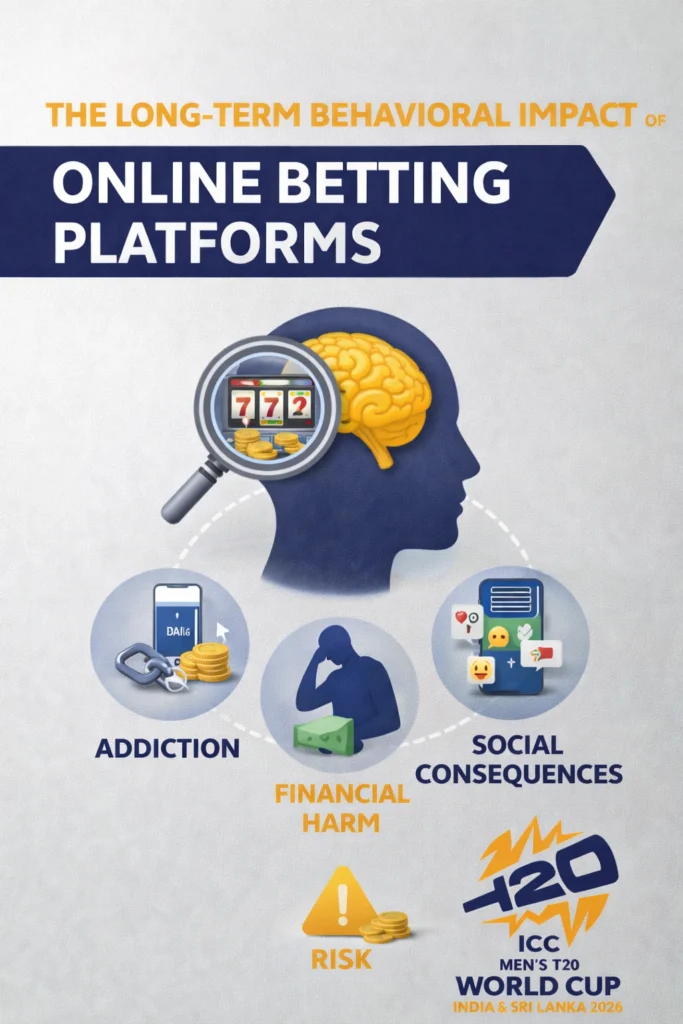
Over time, repeated exposure to online betting platforms can influence habits and decision-making patterns. Digital repetition strengthens behavioral loops. The more frequently a person engages in a fast reward system, the more normalized it becomes.
For casual users, this may simply translate into routine entertainment during sports seasons or special events. For others, it may gradually evolve into a habitual activity embedded in daily life. The transition from occasional participation to routine behavior often happens subtly.
Because online betting platforms operate quietly in the background of everyday digital life — through mobile apps, notifications, and advertisements — their presence becomes constant. This persistent availability increases the importance of self-monitoring and conscious control.
Financial Discipline in a Digital Environment
Managing money online feels different from handling physical cash. When deposits and withdrawals occur digitally, the emotional weight of transactions may feel reduced.
Key financial discipline principles include:
- Separating betting funds from savings accounts
- Tracking all deposits and withdrawals
- Reviewing monthly net results
- Avoiding credit-based deposits
Online betting platforms make transactions simple, but simplicity should not replace accountability.
Clear financial awareness is one of the strongest protections against long-term harm.
The Impact on Sports Integrity
The growth of online betting platforms also affects professional sports.
Match-Fixing Risks
Large betting markets can create incentives for corruption if oversight is weak.
Data Monitoring Systems
Many leagues now cooperate with betting operators to monitor suspicious betting activity.
Integrity Units
Sports organizations have established integrity departments to detect irregular patterns.
While betting adds excitement for fans, it also requires constant vigilance to protect competitive fairness.
Youth Exposure and Digital Advertising
One of the most debated concerns surrounding online betting platforms is youth exposure.
Even where age verification systems are strict, advertising through sports sponsorships and social media increases visibility among younger audiences.
Potential solutions often discussed include:
- Stricter age-verification technology
- Advertising time restrictions
- Educational programs in schools about probability and risk
- Clearer responsible gambling messages
Protecting minors is a central focus in many regulatory discussions worldwide.
Emotional Cycles and Decision-Making
Online betting often triggers emotional highs and lows.
Winning Streaks
Success may increase confidence and encourage larger wagers.
Losing Streaks
Losses may trigger frustration and impulsive recovery attempts.
These emotional cycles can override logical probability thinking. Recognizing emotional triggers is critical for maintaining control.
Experienced participants often emphasize detachment — treating outcomes as mathematical events rather than personal victories or defeats.
The Importance of Digital Detox Periods
In an always-connected world, intentional breaks are increasingly valuable.
Periodic pauses from online betting platforms can:
- Reset emotional balance
- Improve financial clarity
- Reduce impulsive habits
- Reinforce personal boundaries
Self-exclusion tools and temporary account suspensions are practical features that support these breaks.
Stepping away does not signal weakness; it demonstrates control.
Industry Accountability in the Coming Years
As public awareness grows, industry accountability standards are likely to rise.
Future expectations may include:
- Greater transparency in algorithmic decision-making
- Public reporting of responsible gambling metrics
- Independent auditing of AI systems
- Clearer advertising guidelines
Companies that proactively adopt higher ethical standards may gain competitive advantage in increasingly regulated markets.
Technological Convergence and Integration
Online betting platforms may increasingly integrate with other digital services.
Possible developments include:
- Integration with live sports streaming subscriptions
- Interactive betting within virtual sports environments
- Cross-platform gaming ecosystems
- Advanced biometric login systems
While integration improves convenience, it also increases exposure frequency. Responsible design must evolve alongside integration.
The Question of Cultural Acceptance
Cultural attitudes toward gambling vary widely across regions.
In some societies, betting is viewed as entertainment. In others, it carries moral or religious opposition.
As online betting platforms expand globally, cultural sensitivity becomes important. Localization strategies must respect local values, traditions, and legal frameworks.
Global expansion without cultural awareness can create social resistance and reputational damage.
Looking Ahead: Regulation, Innovation, and Balance
The next decade will likely bring:
- Stricter advertising standards
- Stronger consumer protection measures
- More advanced risk detection technology
- Greater international regulatory collaboration
- Enhanced transparency requirements
Innovation will continue, but regulatory oversight will likely tighten in parallel.
The challenge lies in balancing user freedom with protection — encouraging innovation without compromising public welfare.
Final Conclusion: A Digital Industry Defined by Responsibility
Online betting platforms represent one of the most powerful evolutions in digital entertainment. They combine real-time data, artificial intelligence, global connectivity, and financial technology into seamless user experiences.
Their benefits are undeniable:
- Accessibility
- Variety
- Economic contribution
- Technological innovation
Their risks are equally significant:
- Addiction potential
- Financial loss
- Ethical concerns
- Regulatory complexity
The defining factor is responsibility.
When users practice discipline, operators prioritize ethics, and regulators enforce balanced frameworks, online betting platforms can function as controlled entertainment systems within the digital economy.
Without responsibility, the same platforms may contribute to widespread financial and social harm.
The technology itself is neutral. Its impact depends entirely on how it is designed, regulated, and used.
As digital landscapes continue to evolve, awareness and accountability will determine whether online betting platforms remain sustainable innovations — or cautionary examples of unchecked growth in the internet age.
The Psychological Architecture Behind Online Betting Platforms
Modern online betting platforms are not built randomly. Every feature — from button placement to color schemes — is strategically designed to guide user behavior. The structure of these platforms reflects deep research into human psychology, decision-making, and engagement patterns.
Bright visuals, flashing odds changes, countdown timers, and celebratory win animations stimulate excitement. Losses, on the other hand, are often displayed in less dramatic ways, softening their emotional impact. This subtle imbalance can shape perception over time.
The architecture of digital betting environments emphasizes speed and simplicity. Fewer clicks mean faster wagers. Faster wagers mean more activity. More activity increases revenue potential.
Understanding this structure empowers users to engage consciously rather than reactively.
The Illusion of Strategy Versus Probability Reality
A common misconception surrounding online betting platforms is the belief that skill can consistently overcome mathematical margins.
In some areas, such as poker or certain sports analysis strategies, skill can influence short-term outcomes. However, in most standard betting models, the built-in margin ensures long-term profitability for operators.
Probability does not adjust based on emotion, intuition, or past results. Each event remains independent unless directly connected through measurable data.
Believing that a “winning streak” will continue or that a loss is “due for recovery” reflects cognitive bias rather than statistical logic.
Recognizing this distinction helps maintain realistic expectations.
Time Perception in Digital Betting
Time behaves differently in online environments.
Without physical cues such as closing hours, travel time, or social interaction, sessions can extend longer than intended. Hours may pass unnoticed while scrolling through live events or casino rounds.
Online betting platforms often operate in multiple time zones, offering events around the clock. This constant availability eliminates natural stopping points.
Intentional time management becomes critical in preventing extended sessions that exceed planned limits.
Financial Impact Beyond the Individual
The financial effects of online betting platforms extend beyond individual participants.
Household Stability
Excessive losses can impact family budgets and shared responsibilities.
Business Productivity
In extreme cases, compulsive betting habits may influence workplace focus.
Community Resources
Increased demand for financial counseling and addiction support services affects public systems.
These broader consequences contribute to why regulation remains a public policy priority.
Technological Responsibility in Product Development
Developers and designers play a central role in shaping user experience. Ethical product design requires balancing engagement with safeguards.
Responsible development practices may include:
- Built-in spending trackers visible on dashboards
- Mandatory cooling-off options after extended sessions
- Clear display of total losses and wins
- Transparent probability explanations
When transparency becomes a core design feature rather than an afterthought, platforms foster trust.
Advertising Tone and Messaging Ethics
Language used in promotions can strongly influence user perception.
Phrases suggesting easy income, guaranteed success, or risk-free outcomes can mislead audiences. Ethical marketing avoids unrealistic promises and emphasizes entertainment over profit.
Clear disclaimers and responsible gambling messaging create more balanced communication.
As public scrutiny increases, advertising tone will likely face tighter oversight.
Digital Footprint and Privacy Concerns
Online betting platforms collect substantial data, including:
- Transaction history
- Device information
- Geolocation data
- Behavioral activity
While this information supports fraud detection and personalization, it also raises privacy concerns.
Users should review privacy policies and understand how their data is stored and protected. Platforms with transparent data practices are more likely to earn long-term trust.
Cross-Industry Comparisons
Online betting platforms share similarities with other digital industries.
Streaming Services
Personalized recommendations based on user behavior.
Social Media
Notification systems designed to increase engagement.
E-Commerce
Promotional incentives and limited-time offers.
These parallels reveal how engagement-driven digital models operate across sectors. However, because betting involves financial risk, the ethical stakes are higher.
Future Regulatory Shifts
As technology advances, regulation will likely evolve in response.
Possible developments include:
- Real-time reporting requirements for suspicious activity
- Standardized international consumer protection guidelines
- Stricter bonus transparency rules
- Enhanced age-verification systems using biometric tools
Proactive compliance will be essential for long-term industry stability.
The Responsibility Triangle
The sustainability of online betting platforms rests on three interconnected pillars:
- User Awareness – Personal discipline, financial limits, and emotional control.
- Corporate Ethics – Transparent operations, fair odds, and responsible marketing.
- Government Oversight – Balanced regulation, enforcement, and public protection.
If any one of these pillars weakens, imbalance can occur.
Final Reflection: Technology, Temptation, and Choice
Online betting platforms represent a defining example of how digital technology can amplify both opportunity and risk.
They provide:
- Global accessibility
- Real-time engagement
- Economic activity
- Innovative entertainment
But they also amplify:
- Emotional volatility
- Financial vulnerability
- Behavioral dependency risks
The outcome is shaped not by the platform alone, but by collective responsibility.
Technology has made betting faster, smarter, and more accessible than ever before. The challenge now is ensuring that progress does not outpace protection.
In the end, online betting platforms are tools embedded within the digital economy. Their future will depend on ethical innovation, informed participation, and regulatory wisdom.
The power exists. The question is how wisely it will be used.
Digital Transformation and the Evolution of Risk
Online betting platforms are a product of the broader digital transformation that has reshaped nearly every industry. Banking, shopping, education, and entertainment have all migrated online. Betting followed the same path — but with amplified financial and psychological stakes.
Unlike other digital services, online betting platforms combine real-time financial transactions with emotional investment. This fusion intensifies both opportunity and risk. The seamless user journey — from registration to deposit to wagering — reflects the efficiency of modern fintech systems.
Yet efficiency in financial risk environments requires heightened responsibility. When technology removes friction, self-control must replace it.
The Impact of Global Sporting Events
Major global tournaments significantly boost activity on online betting platforms. Events such as international football championships, cricket world tournaments, or global sporting festivals attract casual and experienced bettors alike.
During these periods:
- New account registrations surge
- Promotional campaigns intensify
- Live betting volumes increase dramatically
- Advertising becomes more visible
These peaks highlight the cyclical nature of the industry. Platforms must manage both high traffic loads and responsible gambling messaging during these high-exposure periods.
Artificial Intelligence: Protector or Profit Driver?
Artificial intelligence stands at the center of the industry’s future.
AI can:
- Detect irregular betting patterns
- Identify potential addiction risks
- Improve fraud prevention
- Personalize user dashboards
However, AI can also:
- Target high-spending users with tailored promotions
- Optimize engagement timing
- Encourage repeated interaction
The dual nature of AI creates an ethical crossroads. Its design and application determine whether it acts primarily as a protective safeguard or a revenue optimization tool.
The Influence of Economic Conditions
Economic fluctuations can influence participation in online betting platforms.
During economic downturns, some individuals may turn to betting in hopes of quick financial gain. Unfortunately, this mindset often increases vulnerability to losses.
Conversely, during periods of economic growth, disposable income may support casual recreational betting without severe impact.
This relationship underscores why betting should never be viewed as a solution to financial hardship.
Platform Transparency and Trust Building
Trust remains the most valuable asset for online betting platforms.
Transparency practices that strengthen trust include:
- Clear payout processing timelines
- Published return-to-player (RTP) percentages
- Detailed terms and conditions
- Visible licensing credentials
Platforms that prioritize clarity over complexity are more likely to maintain long-term customer loyalty.
Technological Addiction Versus Gambling Addiction
It is important to distinguish between two overlapping but separate concerns:
- Technological Addiction – Excessive screen time and digital engagement habits.
- Gambling Addiction – Compulsive wagering behavior driven by psychological reinforcement.
Online betting platforms sit at the intersection of both. Their mobile integration and gamified design can reinforce both digital overuse and gambling dependency.
Addressing these issues requires both personal awareness and structured platform safeguards.
Community Dialogue and Public Awareness
Open conversation about online betting platforms reduces stigma and encourages informed participation.
Public discussions often focus on extreme cases. However, balanced dialogue helps individuals recognize early warning signs before severe consequences develop.
Education campaigns that explain:
- Probability fundamentals
- Risk management principles
- Emotional awareness
- Support resources
can significantly reduce harm.
The Balance Between Freedom and Protection
A central debate surrounding online betting platforms concerns personal freedom.
Supporters argue that adults should have autonomy to make entertainment choices. Critics emphasize the need for strict safeguards to protect vulnerable individuals.
The ideal framework likely combines:
- Freedom of access for informed adults
- Strong protective systems for high-risk users
- Transparent communication standards
- Independent regulatory enforcement
Balance is not static; it evolves alongside technology and societal values.
Innovation Beyond Traditional Betting
Future expansion may move beyond standard sports and casino formats.
Potential growth areas include:
- Interactive prediction markets
- Hybrid gaming and wagering experiences
- Skill-based betting competitions
- Blockchain-verified outcome systems
As innovation expands, so must regulatory clarity.
A Turning Point for Digital Responsibility
Online betting platforms represent more than an entertainment trend. They symbolize how digital infrastructure can reshape long-standing industries.
The same digital tools that enable:
- Instant global access
- Real-time analytics
- Seamless financial transactions
also demand:
- Ethical system design
- Responsible marketing
- Transparent governance
- User education
The industry now stands at a maturity phase. Growth is no longer the only objective; sustainability has become equally important.
Concluding Perspective: Power with Accountability
Online betting platforms are powerful digital ecosystems that combine finance, entertainment, psychology, and technology. Their rapid expansion demonstrates the influence of innovation in the internet era.
They provide excitement, accessibility, and economic activity. Yet they also carry significant responsibility due to their financial and emotional impact.
The defining challenge moving forward is accountability.
When users approach betting with discipline, operators design systems ethically, and regulators enforce balanced frameworks, online betting platforms can remain structured entertainment tools.
If responsibility is neglected, risks can escalate quickly.
Technology has already transformed the industry. The next transformation must focus on ethics, transparency, and sustainable growth.
In the digital age, progress is measured not only by innovation — but by how responsibly that innovation is managed.
The Future Identity of Online Betting Platforms
As the digital landscape continues to evolve, online betting platforms are gradually redefining their identity. What began primarily as digital sportsbooks and casino portals is now transforming into multi-layered entertainment ecosystems. The industry is no longer confined to basic wagers; it is expanding into immersive, data-driven, and socially connected environments.
This transformation raises an important question: will online betting platforms be viewed primarily as financial risk systems, or will they become mainstream digital entertainment brands?
The answer depends on how the industry navigates innovation, responsibility, and public trust in the years ahead.
Integration with the Broader Entertainment Industry
Online betting platforms are increasingly integrating with streaming services, live event broadcasting, and interactive media. Real-time statistics, in-play graphics, and instant odds are now embedded directly into sports viewing experiences.
This seamless blending of content and wagering enhances user engagement. Watching and betting become part of the same digital journey.
However, deeper integration also increases exposure. When betting features are embedded directly into entertainment content, it becomes harder for users to separate passive viewing from active wagering.
Responsible integration strategies will be crucial as this convergence continues.
Personal Data as the New Currency
Data has become one of the most valuable assets for online betting platforms.
Every action — clicks, deposits, bet sizes, timing patterns — contributes to detailed behavioral profiles. These insights help platforms personalize recommendations and improve fraud detection systems.
But personalization walks a fine line. Used responsibly, it enhances convenience and safety. Used aggressively, it may encourage higher spending through precisely timed incentives.
In the future, transparency around data usage may become one of the strongest trust-building tools in the industry.
Environmental and Social Responsibility
As digital industries grow, environmental and social governance standards are gaining importance.
Online betting platforms rely heavily on cloud servers and digital infrastructure. Energy consumption and sustainability practices may become part of corporate accountability discussions.
Social responsibility initiatives may include:
- Funding for addiction support programs
- Community investment projects
- Transparent corporate reporting
- Responsible marketing commitments
Public perception increasingly favors companies that demonstrate broader social awareness beyond profit.
The Rise of Regulatory Technology (RegTech)
Regulatory technology is emerging as a tool to strengthen compliance.
Automated monitoring systems can:
- Track suspicious transactions
- Verify identity documentation
- Enforce age restrictions
- Monitor promotional limits
RegTech allows platforms to comply with complex legal requirements across multiple jurisdictions more efficiently.
As global regulations tighten, technological compliance solutions will become essential for operational continuity.
The Emotional Economics of Betting
Beyond mathematics and regulation, online betting platforms operate within emotional economics.
Hope, anticipation, excitement, disappointment — these emotions shape user behavior more than logic alone.
The anticipation before an event often drives engagement more strongly than the outcome itself. This psychological cycle sustains repeated participation.
Recognizing emotional drivers allows users to approach betting more mindfully, reducing impulsive reactions and reinforcing control.
Transparency as a Competitive Advantage
In saturated markets, trust differentiates brands.
Platforms that clearly communicate:
- Realistic winning probabilities
- Bonus requirements
- Withdrawal processing times
- Responsible gambling tools
are more likely to build lasting reputations.
In the long term, transparency may become more powerful than aggressive promotional tactics.
The Intersection of Innovation and Ethics
Every major innovation within online betting platforms carries both potential and responsibility.
For example:
- Faster payouts improve user experience but increase financial turnover speed.
- Advanced AI detects fraud but can also optimize spending patterns.
- Immersive interfaces enhance engagement but may intensify emotional involvement.
Ethical innovation means designing systems that consider long-term user well-being alongside business growth.
Digital Literacy as a Protective Shield
As online betting becomes more integrated into digital life, digital literacy becomes a form of protection.
Understanding:
- How algorithms work
- How probability is calculated
- How marketing strategies influence behavior
- How personal data is used
empowers users to participate with awareness rather than impulse.
Education may prove more effective than restriction alone.
The Industry’s Reputation Crossroads
Online betting platforms are approaching a reputation crossroads.
If the industry prioritizes responsible growth, ethical design, and transparent communication, it may solidify its position as a regulated entertainment sector.
If short-term profits dominate decision-making, increased public backlash and regulatory crackdowns may follow.
Reputation is difficult to rebuild once trust is lost. Forward-thinking operators understand that sustainability depends on credibility.
The Defining Role of Personal Choice
Ultimately, technology and regulation create frameworks, but individual choice determines outcomes.
Every user decides:
- How much to deposit
- When to stop
- Whether to chase losses
- Whether to treat betting as entertainment or income
Self-awareness transforms a potentially risky environment into a controlled experience.
Final Closing: A Digital Era Defined by Responsibility
Online betting platforms represent one of the most dynamic and controversial sectors of the digital economy. They showcase how technology can revolutionize traditional industries, creating unprecedented accessibility and innovation.
They also demonstrate how quickly digital convenience can amplify risk.
The industry’s future will not depend solely on faster apps, smarter algorithms, or larger bonuses. It will depend on accountability, ethical leadership, informed participation, and balanced regulation.
Online betting platforms are powerful tools shaped by data, psychology, and global connectivity. Their long-term impact will be determined not by technology alone, but by how responsibly that technology is implemented and used.
In the evolving digital era, power without responsibility creates instability. Power guided by ethics creates sustainability.
The direction chosen today will define the legacy of online betting platforms for generations to come.
The Final Analysis: Where Online Betting Platforms Stand Today
After years of rapid expansion, technological refinement, and global adoption, online betting platforms now stand at a mature yet transformative stage. Growth is no longer just about attracting users — it is about retaining trust, adapting to regulation, and proving long-term sustainability.
The industry has moved beyond its early experimental phase. It now operates with advanced data infrastructure, sophisticated risk management systems, and competitive global branding. Yet with maturity comes deeper scrutiny. Regulators, consumer protection groups, and the public are examining not just profitability, but responsibility.
A Dual Reality: Opportunity and Exposure
Online betting platforms operate within a dual reality.
On one side, they provide:
- Instant global access
- Real-time sports engagement
- Interactive entertainment
- Economic contribution through taxes and employment
- Technological innovation in AI and fintech
On the other side, they introduce:
- Increased exposure to financial risk
- Emotional volatility linked to outcomes
- Addiction vulnerability
- Data privacy concerns
- Regulatory and ethical challenges
These opposing forces define the ongoing debate.
What Sustainable Success Looks Like
For online betting platforms to maintain long-term relevance, certain pillars must remain strong:
1. Ethical Product Design
Interfaces that promote awareness rather than conceal risk.
2. Responsible Marketing
Messaging that emphasizes entertainment over guaranteed profit.
3. Transparent Financial Systems
Clear odds, straightforward withdrawal policies, and honest promotional terms.
4. Robust Compliance
Strict adherence to local and international regulations.
5. User Empowerment Tools
Deposit limits, self-exclusion options, and detailed activity tracking.
Sustainable growth depends on integrating all of these elements simultaneously.
The Risk of Overexpansion
Rapid global expansion can sometimes outpace regulatory preparedness.
When platforms enter emerging markets without clear oversight, the risk of exploitation increases. Payment systems may lack monitoring. Advertising may target inexperienced audiences. Consumer protection mechanisms may be limited.
Responsible international expansion requires cooperation with local authorities and adaptation to regional cultural norms.
Technological Acceleration and Human Limits
Technology evolves faster than human behavioral adaptation.
Online betting platforms continue to improve speed, personalization, and immersion. But human emotional responses to risk remain constant.
Excitement, fear, hope, and frustration influence decisions regardless of technological sophistication.
The future challenge is aligning accelerating digital systems with steady human self-control.
Lessons from Other Digital Industries
Other sectors provide important lessons:
- Social media faced backlash over addictive design patterns.
- Fintech platforms encountered regulation after rapid growth.
- Cryptocurrency markets experienced volatility due to limited oversight.
Online betting platforms can learn from these examples. Early adoption of ethical frameworks may prevent future crises.
The Central Question Moving Forward
The most important question is not whether online betting platforms will continue to grow — they likely will.
The real question is:
Will growth be guided by responsibility, or driven solely by competition and profit?
The answer will determine public perception, regulatory intensity, and long-term viability.
A Framework for Responsible Participation
For individuals who choose to engage, responsible participation includes:
- Viewing betting as entertainment, not income
- Setting strict financial limits
- Taking regular breaks
- Understanding probability fundamentals
- Seeking help if control weakens
Personal awareness is the strongest defense against negative outcomes.
Final Verdict: A Powerful Digital Industry at a Defining Crossroads
Online betting platforms are among the most powerful examples of how digital innovation reshapes traditional industries. They combine data science, mobile technology, financial systems, and real-time engagement into a seamless global network.
Their advantages are transformative:
- Convenience
- Accessibility
- Variety
- Economic impact
- Technological advancement
Their risks are equally significant:
- Financial instability
- Behavioral addiction
- Ethical controversy
- Regulatory pressure
The industry now stands at a defining crossroads.
If innovation continues without ethical boundaries, long-term instability may follow. If growth is paired with transparency, user protection, and balanced regulation, online betting platforms can remain sustainable components of the digital economy.
The technology is already powerful. The next chapter will be written by responsibility.
And in the digital age, responsibility is the true measure of progress.
Ultimate Closing Section: The Defining Future of Online Betting Platforms
Online betting platforms have completed a remarkable transformation — from niche digital experiments to global, multi-billion-dollar ecosystems embedded in everyday online life. They reflect the speed, intelligence, and reach of modern technology. Yet they also reveal how quickly convenience can amplify risk.
At this stage, the conversation is no longer about whether online betting platforms will survive. It is about how they will evolve.
A Turning Point Between Expansion and Accountability
The industry’s early years were defined by aggressive growth, rapid technological upgrades, and market expansion. Today, the focus is shifting toward:
- Regulatory refinement
- Consumer protection
- Ethical innovation
- Long-term sustainability
Markets that once prioritized speed are now emphasizing stability. Governments are tightening advertising rules. Operators are investing in responsible gambling tools. Public awareness is increasing.
This turning point will determine whether online betting platforms strengthen their legitimacy or face growing resistance.
The Long-Term Industry Blueprint
To remain viable in the coming decades, online betting platforms must build around five core pillars:
1. Transparency
Clear communication about odds, risks, bonuses, and withdrawals.
2. Ethical Technology
AI and data analytics used to protect users, not only to increase engagement.
3. Responsible Marketing
No misleading income narratives or unrealistic promises.
4. Strong Cybersecurity
Protection of financial and personal data at the highest standards.
5. Proactive Regulation
Collaboration with authorities instead of reactive compliance.
This blueprint separates sustainable platforms from short-term operators.
The Human Responsibility Factor
No technology operates independently of human choice.
Online betting platforms provide the system.
Users provide the decisions.
Regulators provide the boundaries.
When one of these elements fails, imbalance occurs.
Responsible participation requires self-awareness, financial discipline, and emotional control. Betting should enhance entertainment — not replace income, solve financial problems, or become a coping mechanism.
The Risk of Ignoring Ethical Evolution
Industries that ignore ethical responsibility often face backlash.
If online betting platforms fail to prioritize consumer protection:
- Regulatory crackdowns may intensify
- Advertising restrictions may expand
- Public trust may decline
- Market access may shrink
History shows that industries survive longest when they adapt proactively rather than react defensively.
A Future Built on Smart Regulation and Smart Users
The healthiest path forward includes:
- Data-driven risk monitoring systems
- Clear age verification and identity protocols
- Spending awareness dashboards
- Public education campaigns about probability
- Transparent dispute resolution systems
When users are informed and platforms are accountable, risk becomes manageable rather than overwhelming.
Final Reflection: Power Balanced by Responsibility
Online betting platforms represent one of the clearest examples of digital power in the modern era. They demonstrate how technology can compress time, remove physical boundaries, and connect financial systems globally.
They are:
- Innovative
- Profitable
- Accessible
- Fast-moving
But they are also:
- Emotionally charged
- Financially sensitive
- Socially debated
- Ethically complex
The ultimate future of online betting platforms will not be determined by algorithms alone. It will be defined by balance — between growth and protection, freedom and regulation, innovation and accountability.
Technology has already rewritten the rules of gambling. Now, responsibility must rewrite the rules of sustainability.
In the end, online betting platforms are tools of modern digital life. Their impact — positive or negative — depends entirely on how wisely they are designed, regulated, and used.
That choice remains in human hands.
Frequently Asked Questions (FAQ) About Online Betting Platforms
1. What are online betting platforms?
Online betting platforms are digital websites or mobile applications that allow users to place wagers on sports events, casino games, esports, poker, and other prediction-based activities using real money.
2. Are online betting platforms legal?
The legality of online betting platforms depends on the country or region. Some jurisdictions regulate and license operators strictly, while others restrict or prohibit online gambling. Users should always check local laws before registering.
3. How do online betting platforms make money?
Most platforms earn revenue through built-in margins in betting odds (known as the house edge). This mathematical advantage ensures long-term profitability regardless of short-term user wins.
4. Are online betting platforms safe?
Licensed and regulated platforms typically use encryption, identity verification, and fraud detection systems to protect users. However, unregulated or offshore sites may pose risks related to data security and unfair practices.
5. Can you consistently make money from online betting?
While short-term wins are possible, long-term consistent profit is statistically difficult due to the built-in house margin. Online betting should be viewed as entertainment rather than a reliable income source.
6. What is live betting?
Live betting (also called in-play betting) allows users to place wagers during an ongoing event. Odds update in real time based on match developments.
7. What are wagering requirements?
Wagering requirements refer to the number of times a bonus amount must be bet before winnings can be withdrawn. For example, a 5x wagering requirement on a $100 bonus means you must place $500 in bets before withdrawing bonus-related winnings.
8. How do online betting platforms prevent fraud?
Most platforms use advanced monitoring systems, identity verification (KYC procedures), encryption technology, and artificial intelligence tools to detect suspicious activity and prevent fraud.
9. What is responsible gambling?
Responsible gambling involves setting financial and time limits, understanding the risks, and avoiding betting as a source of income. Many platforms offer tools such as deposit limits, self-exclusion, and activity reminders to support responsible play.
10. What should I check before joining an online betting platform?
Before signing up, consider:
- Licensing and regulatory approval
- Security measures and encryption
- Withdrawal processing times
- Bonus terms and conditions
- Customer support availability
11. Can online betting platforms be addictive?
Yes, due to their accessibility, instant results, and continuous availability, online betting platforms can contribute to compulsive behavior if not managed responsibly. Awareness and self-control are essential.
12. What payment methods do online betting platforms accept?
Most platforms support credit/debit cards, bank transfers, digital wallets, and sometimes cryptocurrencies. Available options vary by region and operator.
13. What is the house edge?
The house edge is the built-in statistical advantage that ensures the platform makes a profit over time. It is reflected in slightly adjusted odds compared to true probability.
14. Are winnings from online betting taxable?
Tax rules vary by country. In some regions, winnings are tax-free for players, while in others they must be reported as income. Always verify local tax regulations.
15. How can I reduce risks while using online betting platforms?
You can reduce risks by:
- Setting strict spending limits
- Avoiding chasing losses
- Taking regular breaks
- Tracking your betting history
- Seeking support if you feel loss of control
Our Partner Websites & Trusted Belong Network
In the rapidly evolving world of online betting platforms, trust and credibility are everything. A strong digital presence is not built in isolation — it grows through strategic partnerships, verified networks, and shared standards of reliability.
We are proud to be connected with a trusted belong network of platforms that focus on delivering secure access, smooth user experience, and responsible digital engagement across sports and betting communities.
Our Partner Website
Our featured partner platform, T20WorldCupvip, serves as a dedicated hub for cricket enthusiasts and sports followers who want updated insights, match-related engagement, and streamlined digital access during major tournaments. The platform emphasizes speed, accessibility, and event-focused interaction, making it a valuable part of our extended network.
Trusted Network Platforms
We also maintain strong digital associations with the following platforms within our trusted belong network:
Each of these platforms operates within its own niche focus while maintaining core principles of digital accessibility, structured user systems, and streamlined account processes.
Why Network Strength Matters
Being part of a trusted network offers several advantages:
- Consistent digital standards
- Enhanced platform reliability
- Shared technological insights
- Broader sports coverage
- Improved user accessibility
In a competitive digital ecosystem, collaboration strengthens infrastructure and builds long-term credibility. Users benefit from smoother navigation, coordinated systems, and more structured service delivery.
Commitment to Transparency and Digital Integrity
While partnerships enhance reach and infrastructure, user awareness remains essential. We encourage all visitors to:
- Review platform policies carefully
- Understand local regulations before participation
- Practice responsible engagement
- Verify terms and conditions on individual platforms
Our trusted belong network aims to promote structured, accessible, and transparent digital engagement within the online betting landscape.
As the industry continues to grow, strong partnerships and responsible collaboration will remain central to maintaining credibility and user confidence across all connected platforms.
 Get WhatsApp ID Now