

Introduction:
In a world where distance no longer defines connection, competition has found a new home. The stadium has transformed into a screen. The crowd has become invisible yet global. The whistle has turned into a notification sound. Online matches are no longer just a form of entertainment—they are a powerful reflection of how technology has reshaped human interaction, rivalry, and ambition.
An online match begins with a simple click, but what follows is far from simple. Within seconds, players from different cities, countries, and cultures are brought together into a shared digital arena. They may never see each other’s faces. They may never speak the same language. Yet they understand one universal truth: only skill, strategy, and focus will decide the outcome. In this space, background fades away. Identity is reduced to performance. What matters is how quickly you think, how accurately you react, and how intelligently you adapt.
The rise of online matches signals more than a shift in gaming culture—it represents a transformation in the way people compete and connect. No longer restricted by physical boundaries, players can test themselves against opponents they would never encounter in real life. A student in a small town can challenge a professional-level competitor across the globe. A beginner can learn by facing experienced players. The digital arena has democratized competition, making opportunity accessible to anyone with determination and an internet connection.
But do not mistake accessibility for simplicity. Online matches demand intense mental engagement. They require sharp decision-making under pressure. They test patience, emotional control, and resilience. Every move carries consequences. Every second matters. There is no pause button in a live competitive moment. The pace is relentless, the stakes feel real, and the psychological battle is constant.
Beyond individual performance, online matches also redefine teamwork. Players who have never met must coordinate strategies instantly. Communication becomes precise and purposeful. Trust is built through actions rather than words. A single miscalculation can shift momentum. A perfectly timed move can turn defeat into victory. In these moments, collaboration becomes as critical as individual talent.
The emotional impact of online matches is equally powerful. The tension of a close contest. The adrenaline rush of a comeback. The frustration of a narrow loss. The satisfaction of earned victory. Though the arena is digital, the emotions are entirely human. These experiences create memories, rivalries, friendships, and sometimes even careers.
As technology continues to evolve, online matches are becoming more immersive and competitive. Faster networks reduce delay. Advanced systems ensure fair matchmaking. Global tournaments attract massive audiences. What was once considered a casual pastime has grown into a structured and respected competitive ecosystem.
Yet at its core, the essence remains timeless. Online matches are about challenge. About growth. About stepping into uncertainty and testing your limits. They are about proving something—not just to others, but to yourself.
When the countdown begins and the screen glows with anticipation, you are not just starting a game. You are entering a modern battlefield of minds. And in that digital arena, only focus, strategy, and courage will define the outcome.
The Psychology Behind Every Online Match
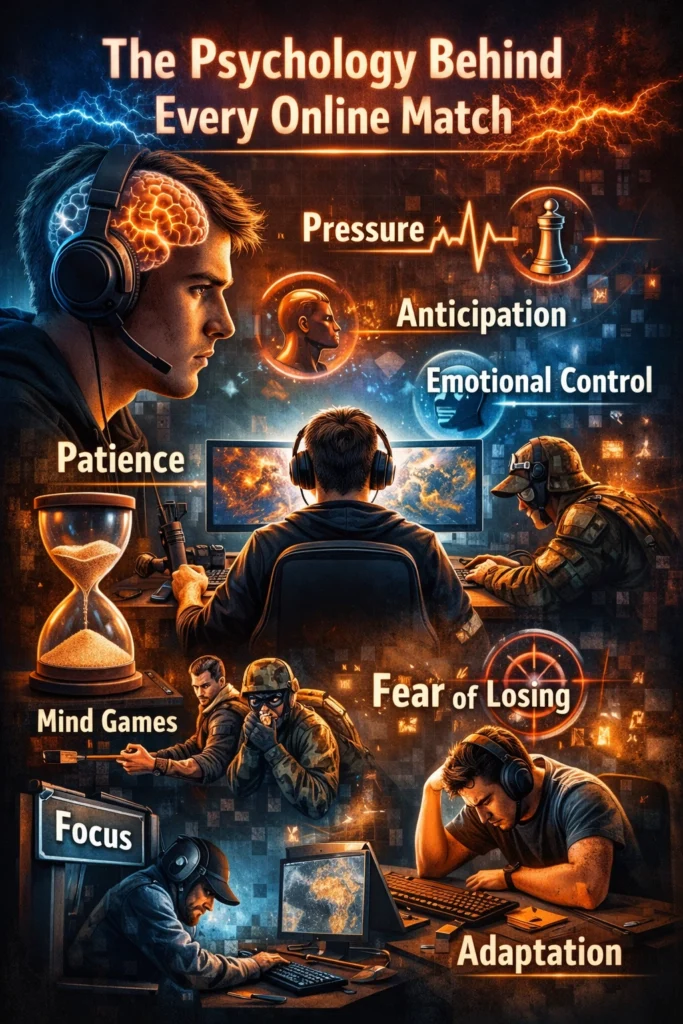
The real battle in an online match rarely happens on the screen alone. It unfolds inside the mind. Every movement, every decision, every hesitation is guided by thought before it becomes action. While many people see online matches as fast reactions and quick fingers, experienced players know the truth — the strongest weapon is mental control.
The first psychological challenge is pressure. The moment a match starts, the brain shifts into alert mode. Heart rate increases. Attention sharpens. You become hyper-aware of every detail. A sound cue, a timer ticking down, a sudden movement — all demand instant interpretation. Unlike casual play, competitive online matches punish hesitation. Even a fraction of a second can decide success or failure.
Then comes anticipation. Skilled players are not just reacting; they are predicting. They study patterns. They remember habits. If an opponent repeats a move twice, it becomes a possibility the third time. The mind builds a model of the opponent’s behavior, and every decision becomes a calculated response rather than a random action. This mental forecasting separates average competitors from exceptional ones.
Another powerful element is emotional control. Anger, excitement, fear — each can disrupt judgment. A player who panics rushes into mistakes. A player who becomes overconfident ignores risks. The most dangerous competitor is the calm one. Calm players recover faster from errors. They adapt instead of reacting impulsively. In many matches, victory belongs not to the fastest, but to the most composed.
Online matches also test patience. Some rounds stretch longer than expected. Opponents stall. Situations repeat. The urge to force a result grows stronger with time. Many players lose not because they lack skill, but because they cannot wait. They make a reckless decision just to break tension. Experienced competitors understand that silence, delay, and observation are sometimes the strongest strategies.
Mind games play a huge role as well. Players intentionally behave unpredictably. They change pace. They fake patterns. They bait reactions. The goal is simple — make the opponent doubt their own judgment. When doubt enters, confidence weakens. When confidence weakens, mistakes appear. In this invisible psychological duel, awareness becomes armor.
Focus endurance is another hidden challenge. A single online match can demand constant attention for long periods. The brain tires quickly under continuous pressure. Small lapses in concentration lead to big consequences. Top competitors train themselves to maintain clarity even when mentally exhausted. They learn to reset their focus after every round, treating each moment as a fresh start.
There is also the fear of losing. Because results are immediate and visible, defeat feels personal. Some players play cautiously just to avoid mistakes. Ironically, that caution often causes defeat. Winning requires controlled risk. Confidence means accepting that failure is possible and acting anyway. Those who embrace risk intelligently grow stronger with each match.
Over time, players develop intuition. They no longer consciously analyze every situation. The brain recognizes patterns instantly and responds automatically. What once required effort becomes instinct. This is the moment when performance feels effortless — not because it is easy, but because experience has trained the mind to operate faster than conscious thought.
An online match, therefore, is not merely a digital activity. It is a psychological contest where concentration, emotional discipline, and strategic thinking interact continuously. The screen shows actions, but the real competition happens in thoughts. Master the mind, and the game follows. Lose control of the mind, and even perfect mechanics cannot save the match.
Team Dynamics and the Power of Coordination
While individual online matches test personal skill and mental strength, team-based online matches introduce a completely different level of complexity. Here, winning is no longer about one player outperforming another. It becomes about unity, timing, trust, and shared understanding among people who often have never met in real life.
The moment a team match begins, roles start to form naturally. Some players lead, calling strategies and directing movement. Others support, ensuring stability and balance. Some specialize in aggressive actions, creating pressure, while others defend and protect space. A successful team is not a group of identical players — it is a collection of complementary abilities working toward a single outcome.
Communication is the foundation of coordination. Unlike traditional environments where body language helps convey intention, online teammates rely on brief signals, short commands, and precise timing. There is no space for long explanations. A single word or sound can trigger a complex action. Effective teams learn to speak less but understand more. Over time, communication becomes instinctive rather than deliberate.
Trust plays a crucial role. Every player must believe that teammates will perform their responsibilities. If one person tries to control everything, the structure collapses. Overlapping decisions create confusion, and hesitation spreads across the team. But when trust exists, movement becomes fluid. Players commit to plans confidently because they rely on each other’s awareness.
Adaptability becomes essential in team matches. Opponents constantly change tactics. A strategy that worked moments ago may suddenly fail. Teams that stubbornly stick to a single plan often fall apart. Strong teams observe, adjust, and restructure within seconds. They treat strategy as flexible rather than fixed.
Conflict is unavoidable. Mistakes happen. Someone misjudges timing. Someone reacts too late. In high-pressure moments, frustration rises quickly. The difference between average and exceptional teams is how they handle these situations. Blame weakens coordination. Constructive feedback strengthens it. Teams that maintain composure after errors recover faster and perform better in later rounds.
Synchronization is another hidden strength. The most effective teams act almost simultaneously. Not because they counted together, but because they sense the same moment. This shared awareness develops through repeated play and careful observation. Over time, players begin predicting not only opponents but also their own teammates.
Leadership in online matches is unique. The best leaders do not dominate conversation; they provide clarity. They simplify chaos into understandable decisions. They adjust strategies based on real-time conditions rather than rigid plans. A calm leader stabilizes the entire team, especially during tense situations.
Momentum also affects team performance. A single successful play can energize everyone. Confidence spreads rapidly. Movements become sharper. Decisions become quicker. Conversely, consecutive mistakes can drain morale. Skilled teams recognize this and deliberately slow the pace to regain control rather than rushing blindly.
Ultimately, team-based online matches reveal an important truth: coordination multiplies strength. Five skilled individuals do not automatically form a strong team. But five synchronized players can overcome opponents who appear individually superior. Victory emerges not from isolated brilliance but from collective harmony.
In these digital arenas, strangers often become partners, partners become friends, and friends become unstoppable units. The screen separates bodies, yet shared effort connects minds. When coordination clicks perfectly, the experience feels less like playing together and more like thinking together — and that is when a team becomes truly powerful.
Growth, Discipline, and the Habit of Improvement
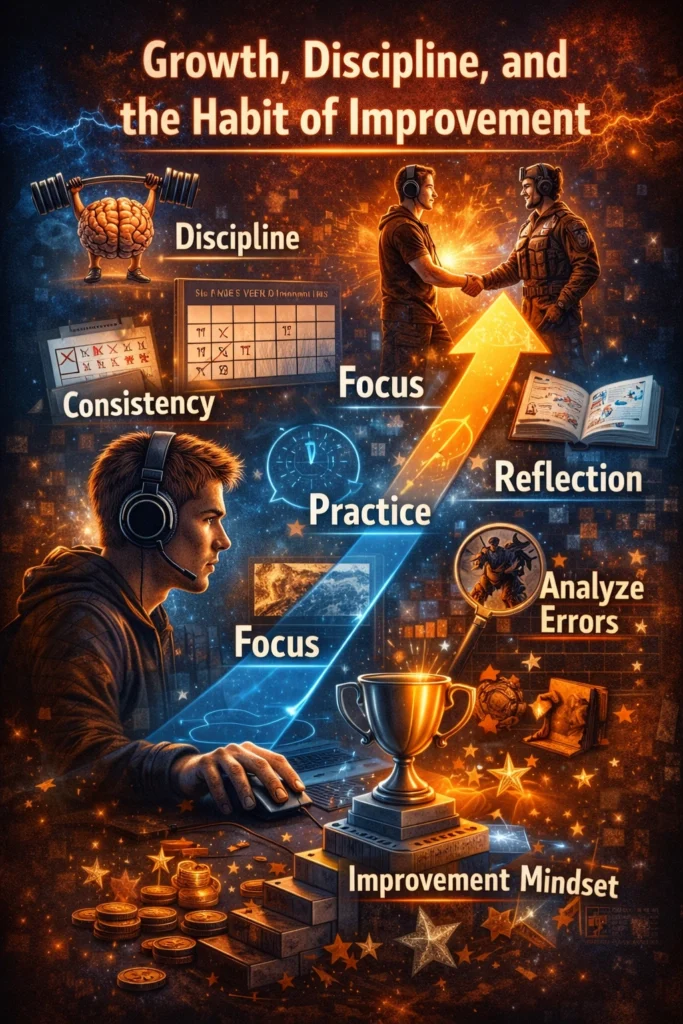
An online match may last only minutes, but the journey of becoming better at it stretches far beyond a single session. Improvement does not come from playing endlessly without reflection. It comes from awareness — the ability to understand why something worked, why it failed, and what must change next time.
Every match leaves behind information. A lost round is not just a defeat; it is feedback. Perhaps the timing was off. Perhaps the decision was rushed. Perhaps the strategy was predictable. Players who grow treat mistakes as data instead of embarrassment. They replay moments in their minds, noticing details they ignored during the heat of competition. Over time, this habit transforms frustration into progress.
Discipline becomes the hidden engine behind consistent performance. Many players rely only on mood — they play when they feel energetic and stop when they feel tired. But real growth begins when practice becomes structured. Short focused sessions teach more than long distracted ones. Training attention, reaction, and awareness deliberately produces sharper results than random repetition.
Consistency matters more than intensity. Playing ten matches with focus builds more skill than playing fifty carelessly. The brain learns through patterns, and repetition with intention strengthens those patterns. Gradually, movements become smoother. Decisions become quicker. Situations that once felt overwhelming begin to feel manageable.
Observation is another powerful tool. Watching other skilled players exposes new possibilities. Different approaches reveal alternative solutions to familiar problems. Instead of copying blindly, thoughtful players analyze why a particular decision worked. Understanding reasoning builds adaptability, while imitation alone limits growth.
There is also a need to balance confidence and humility. Confidence allows bold decisions. Without it, hesitation slows reaction. Yet excessive confidence blocks learning because mistakes are ignored or blamed on luck. The strongest competitors maintain a curious mindset — they assume there is always something new to understand.
Rest plays an important role as well. Continuous play exhausts attention. Fatigue reduces reaction speed and clouds judgment. Breaks allow the brain to process patterns subconsciously. Often, improvement appears after stepping away for a while. Clarity returns, and previously difficult situations suddenly make sense.
Goal setting guides progress. Instead of aiming only to win, skilled players focus on specific improvements: better timing, smarter positioning, clearer communication, or calmer reactions. Winning becomes a natural result rather than the sole objective. This shift reduces pressure and accelerates learning.
Patience is essential because growth is rarely visible day by day. Some sessions feel stagnant. Some feel worse than before. Yet over weeks and months, patterns change. Actions that once required effort become automatic. Decision-making speeds up without conscious thought. The transformation is gradual but undeniable.
Online matches reward those who respect the process. Talent may create early success, but discipline sustains it. Improvement belongs to the player who returns after defeat, adjusts after mistakes, and practices with purpose rather than impulse.
In the end, the real victory is not a single match won but a player improved. The scoreboard resets every round, but skill accumulates quietly. And one day, without realizing exactly when it happened, the player who once struggled becomes the one others struggle against.
The Emotional Highs and Lows of Digital Competition
Beyond skill, strategy, and teamwork, online matches are deeply emotional experiences. The screen may appear cold and mechanical, but the reactions it creates are intensely human. Every match carries anticipation before it begins, tension while it unfolds, and reflection after it ends.
The waiting moment is often the most powerful. As the countdown starts, thoughts race faster than actions. You imagine possibilities — an early advantage, a close contest, a sudden defeat, or a perfect execution. This anticipation sharpens awareness. Even before the first move, the mind prepares for pressure.
During the match, emotions fluctuate constantly. A small success builds confidence instantly. A single mistake can trigger doubt just as quickly. Because feedback is immediate, reactions are stronger than in many other activities. There is no delay between action and consequence. You know right away whether your decision helped or harmed you.
Frustration becomes familiar to every competitor. Sometimes outcomes feel unfair. A plan fails repeatedly. An opponent seems impossible to predict. In these moments, emotion challenges logic. Players who chase revenge often perform worse, while those who pause and reset regain control. Emotional discipline, therefore, becomes part of competitive skill.
There is also the unique tension of close situations. When the margin between winning and losing disappears, awareness heightens. Every sound matters. Every second stretches longer than usual. Time feels slower, yet decisions must be faster. These moments create the most memorable experiences because they demand complete presence.
Victory brings relief before joy. The body relaxes, the mind releases pressure, and satisfaction follows. Unlike casual entertainment, this satisfaction feels earned. It is not given by chance but created by effort and correct decisions under stress. Even small wins feel significant because they represent improvement.
Defeat, however, teaches more powerful lessons. The initial reaction may be disappointment, but reflection transforms it into motivation. Many players remember losses more clearly than victories because they reveal weaknesses honestly. Facing those weaknesses builds resilience — the willingness to continue despite setbacks.
Online matches also create emotional connections between players who never meet. Rivalries develop naturally. Respect grows after repeated encounters. Familiar opponents become benchmarks for personal growth. When you finally overcome someone who once defeated you easily, the moment carries deep meaning.
Balance is necessary to maintain enjoyment. When emotions become overwhelming, performance declines. Learning to step away, breathe, and return calmly protects both mental health and long-term progress. Healthy competition energizes; uncontrolled emotion exhausts.
Over time, players learn to separate identity from results. Losing a match does not mean being incapable, just as winning does not mean perfection. This understanding allows steady improvement. The focus shifts from proving worth to refining ability.
In the end, online matches mirror real life in condensed form. Effort, uncertainty, hope, disappointment, and achievement appear within short spans of time. Each session becomes a small emotional journey. And perhaps that is why players return again and again — not only to win, but to feel, learn, and grow through the experience.
The Expanding World of Online Match Culture
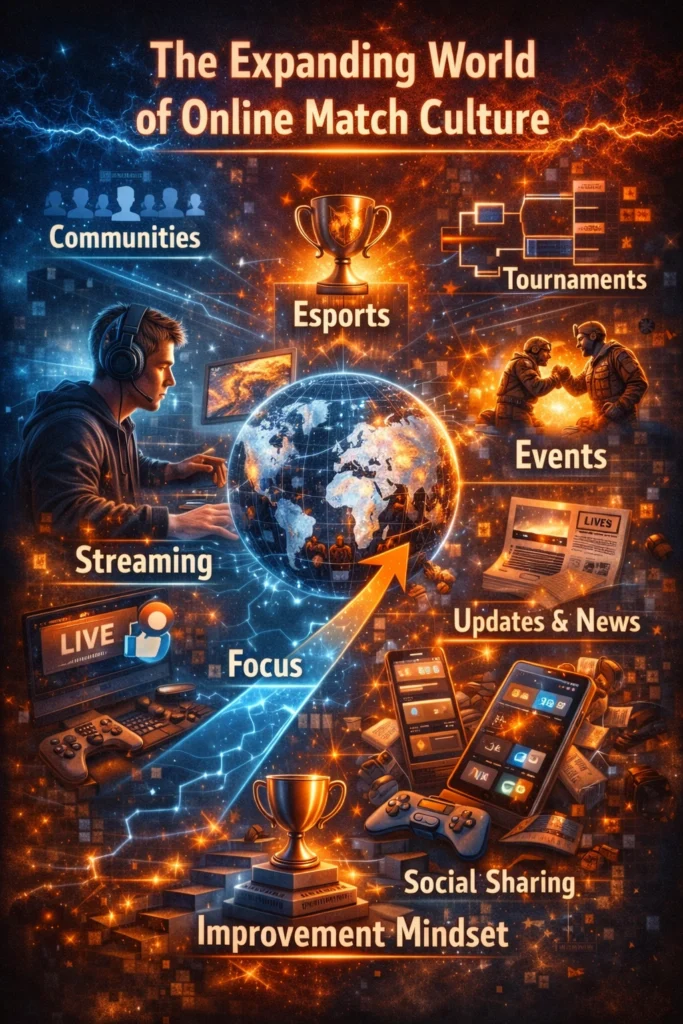
The online match is no longer just a moment of competition; it has become a complete culture. Every day, millions of players log in specifically for an online match, not just to pass time but to participate in a shared global routine. The online match has evolved into a daily ritual — players wake up, think about their next online match, and plan their schedules around when they can play another online match.
Communities now exist purely because of the online match experience. Forums discuss strategies for a difficult online match. Groups gather to review recordings of an online match. Friends who met during an online match continue talking long after the online match ends. The online match has turned strangers into teammates and teammates into long-term connections. What begins as a simple online match often becomes a continuing relationship built on repeated online match encounters.
Streaming has amplified the importance of the online match even further. Spectators watch an online match the same way audiences once watched live sports. They analyze each online match decision, celebrate clutch moments in an online match, and debate outcomes of a controversial online match. A single dramatic online match can trend across platforms within minutes. The online match is no longer private; it is performance.
Tournaments have elevated the online match to a professional level. Competitive leagues organize structured online match schedules. Teams train specifically for upcoming online match series. Coaches prepare strategies tailored for a particular online match opponent. Fans wait for the next big online match as eagerly as any traditional sporting event. Prize pools, rankings, and championships now revolve entirely around the outcome of an online match.
The language of the online match has also entered everyday conversation. Players talk about “carrying” after a strong online match or “learning” from a tough online match. Even outside gaming, people describe real-life challenges as if they were an online match — preparing, adapting, and finishing strong. The influence of the online match stretches beyond the screen into daily thinking patterns.
Technology continues shaping the online match experience. Faster connections make every online match smoother. Better matchmaking creates a fairer online match environment. Cross-platform systems allow anyone to join an online match regardless of device. With each advancement, the online match becomes more accessible and more competitive at the same time.
Importantly, the online match has created opportunities. Some players build careers from consistent online match performance. Others teach strategies based on their online match experience. Content creators analyze famous online match moments for large audiences. The online match is not just entertainment anymore — it is education, profession, and social interaction combined.
Despite all growth, the core attraction of the online match remains simple: challenge. Each online match offers uncertainty. Each online match asks a question — are you ready now? Players return because every online match feels like a fresh start. Yesterday’s online match does not guarantee today’s online match result. The cycle repeats endlessly, keeping motivation alive.
The culture surrounding the online match proves that competition adapts with technology. What once required physical presence now thrives digitally. Yet the excitement is identical. The heartbeat during a decisive online match moment feels as real as any physical contest. The arena changed, but the competitive spirit did not.
And as long as people seek challenge, connection, and improvement, the online match will continue growing — match after match, day after day, player after player.
Conclusion
In the end, an online match is never just about winning a round or defeating an opponent. It becomes an experience that extends beyond the screen and into mindset. Every session teaches awareness, patience, and control. Sometimes you dominate, sometimes you struggle — but each online match leaves you sharper than before.
For many players, the journey also connects them with platforms and communities built around competition and live action. Whether exploring match-based activities through external platforms like onlinecricketid or staying updated with live match environments and coverage internally at t20worldcup, the ecosystem around the online match keeps expanding. The competition does not stop when the match ends; it continues through discussion, analysis, and preparation for the next challenge.
What truly matters is growth. A scoreboard resets every game, but skill and understanding accumulate quietly. You begin reacting calmer, thinking clearer, and handling pressure better — not only inside an online match but in everyday decisions as well.
So when the next match loads and the countdown begins, it is more than entertainment. It is another opportunity to test your focus, refine your strategy, and understand yourself under pressure. The arena may be digital, but the improvement is real — and that is why players keep returning, match after match.
FAQs – Online Match
1. What is an online match?
An online match is a real-time competitive session played over the internet where players compete against other players instead of a computer system. It can be one-on-one or team-based and depends on skill, timing, and decision-making.
2. Do online matches require high skill to start?
No. Beginners can start easily. Most platforms match players with similar levels, so you gradually improve while playing with opponents close to your experience.
3. Why do online matches feel more intense than offline games?
Because you are competing against real human thinking, not predictable programming. Human decisions are unpredictable, which increases pressure, focus, and excitement.
4. How can someone improve performance in online matches?
Play consistently, observe mistakes, stay calm during tense moments, and focus on decision-making instead of only speed. Improvement comes from awareness, not just repetition.
5. Are online matches only about fast reactions?
No. Strategy, patience, anticipation, and emotional control matter more than pure reaction speed. Smart decisions often defeat quick but careless actions.
6. What is the biggest mistake beginners make?
Rushing decisions. Many players panic and force actions instead of reading the situation. Waiting and understanding the opponent usually produces better results.
7. Do team online matches need communication?
Yes. Coordination is essential. Even short signals or planned roles improve teamwork and increase chances of winning.
8. Can online matches help develop real-life skills?
Yes. They improve concentration, quick decision-making, pressure handling, and adaptability — skills useful in daily life situations.
9. Why do players keep returning after losing?
Because every match feels like a new chance. Losses reveal weaknesses, and the desire to improve motivates players to try again.
10. Is winning the most important part of an online match?
Not always. Long-term improvement matters more. Winning comes naturally when skill, discipline, and awareness improve over time.
 Get WhatsApp ID Now